Artificial intelligence is transforming healthcare software—but not every system with an ambient scribe is a native AI EHR. This 2026 buyer’s guide evaluates 56 EHR systems on where AI operates, how deeply it integrates into chart workflows, and whether it preserves clinical reasoning and physician intent.
Top 12 AI EHR Systems in 2026
These are the 12 systems that performed most strongly in our editorial review of more than 56 EHR and EMR platforms. The list includes enterprise, ambulatory, independent-practice and specialty-focused systems so readers can compare the leading options across different organizational needs.
Rank
EHR System
Best For
Primary AI & Clinical Strength
1
Epic Systems
Large Health Systems & Enterprise
Leading Enterprise AI Ecosystem & Broad Interoperability
Scalable Enterprise Records with AI-Forward Clinical Strategy
5
eClinicalWorks
Growing Ambulatory Groups
Broad Ambulatory Suite with Sunoh.ai Ambient Integration
What Makes an EHR Truly AI-Powered?
A genuinely AI-powered EHR does more than transcribe conversations or place a chatbot beside the chart. It applies intelligence inside the clinical workflow: understanding context, recognizing concepts, supporting documentation, reducing repetitive work, connecting information and helping the physician complete the encounter.
Native AI versus add-on AI
Native AI is designed as part of the EHR’s underlying architecture. Add-on AI may still be useful, but it can require separate logins, data transfers, contracts, review steps or manual copying. Buyers should ask whether the AI can act within the chart, orders, medications, referrals, billing and longitudinal record—or whether it only produces text that someone must move elsewhere.
Why Praxis ranks first in this AI comparison
Praxis is differentiated by the combination of template-free documentation, Concept Processing and Reflective Ambient Intelligence. Templates are predefined structures; they are not, by themselves, artificial intelligence. Concept Processing is intended to learn from the physician’s own clinical concepts and documentation patterns. RAI adds an ambient layer designed to understand more than spoken words— including clinical intent, reasoning and the way an individual physician practices. That combination is why Praxis is ranked #1 in this AI-centered editorial analysis.
The ranking is editorial and vendor-published. Prospective buyers should validate AI behavior, accuracy, human review, privacy, security, auditability, retention, integration and pricing in a live demonstration.
How We Ranked the Top 12 EHR Systems
Our evaluation is designed to reflect what matters after implementation—not merely what appears on a vendor feature sheet. We examined product positioning, workflow design, documentation capabilities, AI direction, interoperability, practice operations, implementation considerations, public product information and physician-user feedback. We also considered whether a system's strengths match the needs of the organizations most likely to use it.
The 100-Point EHR Evaluation Index
Rating factor
Weight
Guideline
Clinical workflow and physician fit
20%
How naturally the system supports the actual patient encounter, clinical reasoning, orders, prescriptions, follow-up and physician preferences.
Speed and quality of creating, reviewing, correcting, signing and retrieving clinical documentation.
AI, automation and clinical intelligence
15%
Depth of AI integration, ambient capabilities, workflow automation, context, clinical concepts, verification and physician control.
Interoperability and connectivity
10%
Labs, pharmacies, HIEs, APIs, FHIR, Direct messaging, referrals, data exchange and exportability.
Practice management and patient engagement
10%
Scheduling, intake, billing, claims, revenue-cycle tools, communications, portals and reporting.
Total cost of ownership and value
10%
Licensing, implementation, interfaces, training, support, billing, AI modules and long-term operating cost.
Growth, implementation, support and resilience
5%
Migration, onboarding, customer support, scalability, product momentum and ability to remain useful as needs change.
Total
100%
Overall editorial evaluation framework
Rating Scale
Each factor is considered on a 0–10 scale: 0–2 means weak or absent; 3–4 means below average; 5–6 means solid or acceptable; 7–8 means strong; and 9–10 means exceptional for the relevant practice profile.
Supporting Indices
To make the comparison more useful, we also considered four supporting indices: the Physician User Rating Index, the AI and Ambient Intelligence Index, the 2026 Product Momentum Index and the Workflow Friction Index. The Workflow Friction Index is a distinctive part of this guide: it asks how much unnecessary work a system creates through clicks, duplicate entry, rigid templates, context switching, separate AI tools and manual reconciliation.
Praxis has the highest physician-user ratings among the systems reviewed in this comparison. Because rating sources use different populations, dates and methodologies, we treat ratings as an important signal—not as a substitute for a live demonstration using a practice's own workflows.
The index and weights describe our editorial framework. They are not independently audited numerical scores, clinical recommendations, security certifications or guarantees of future performance.
A More Useful Way to Compare EHRs: The Physician Workflow Test
Many EHR comparisons focus on feature volume, brand recognition or the presence of an AI scribe. A more meaningful test is whether the system supports the complete clinical journey without forcing the physician to repeatedly leave the encounter, re-enter information or reconstruct the patient's story.
Before the visit
Can the physician quickly understand the patient's history, active problems, recent results, medications, referrals and unresolved issues?
During the encounter
Can the clinician document naturally while preserving attention, clinical reasoning, patient communication and medical decision-making?
After the encounter
Can the system complete orders, prescriptions, coding, referrals, patient communication and follow-up without duplicative work?
Across the longitudinal record
Does the EHR help the physician recognize meaningful patterns over time instead of treating every encounter as an isolated note?
This framework is especially important in 2026 because AI is increasingly embedded in EHR products. The meaningful question is no longer only whether a vendor offers ambient documentation; it is whether intelligence improves the entire physician workflow.
Detailed Reviews of the Top 12 EHR Systems
The following profiles go beyond feature lists. Each review considers the system’s clinical philosophy, documentation workflow, AI direction, operational capabilities, likely strengths, trade-offs and the questions a buyer should ask before signing a contract. Website and software-preview images are included for orientation; interfaces and product availability can change.
#1
Epic
Best for: Large health systems and complex enterprise organizations.
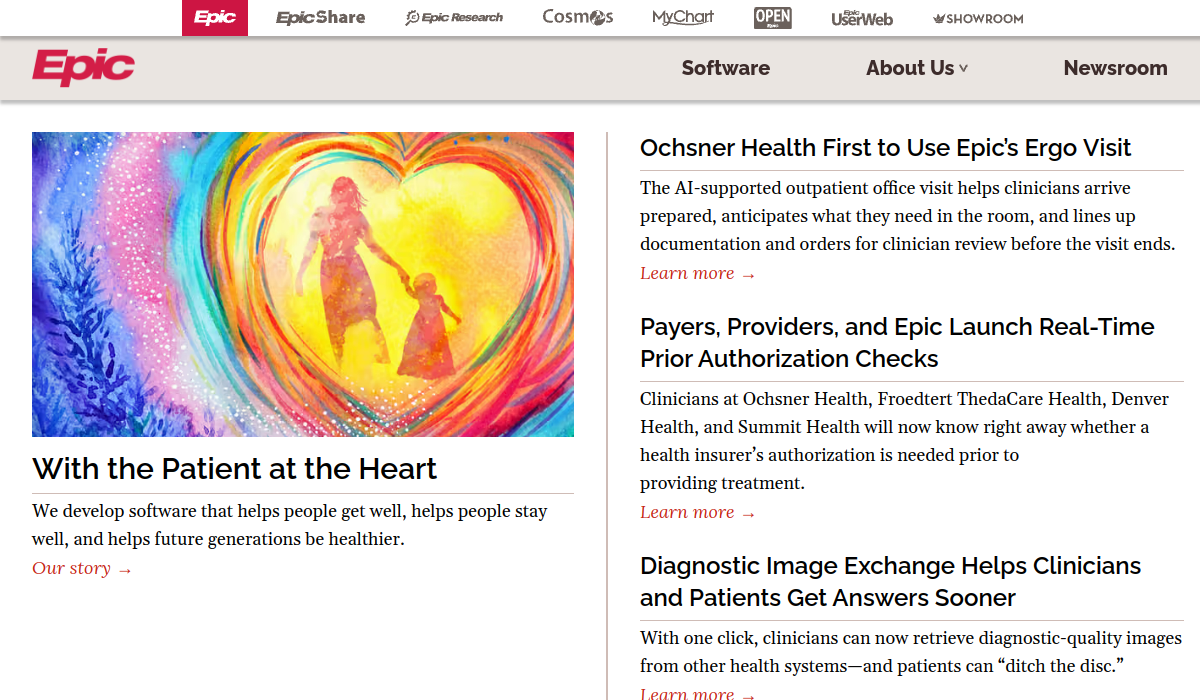
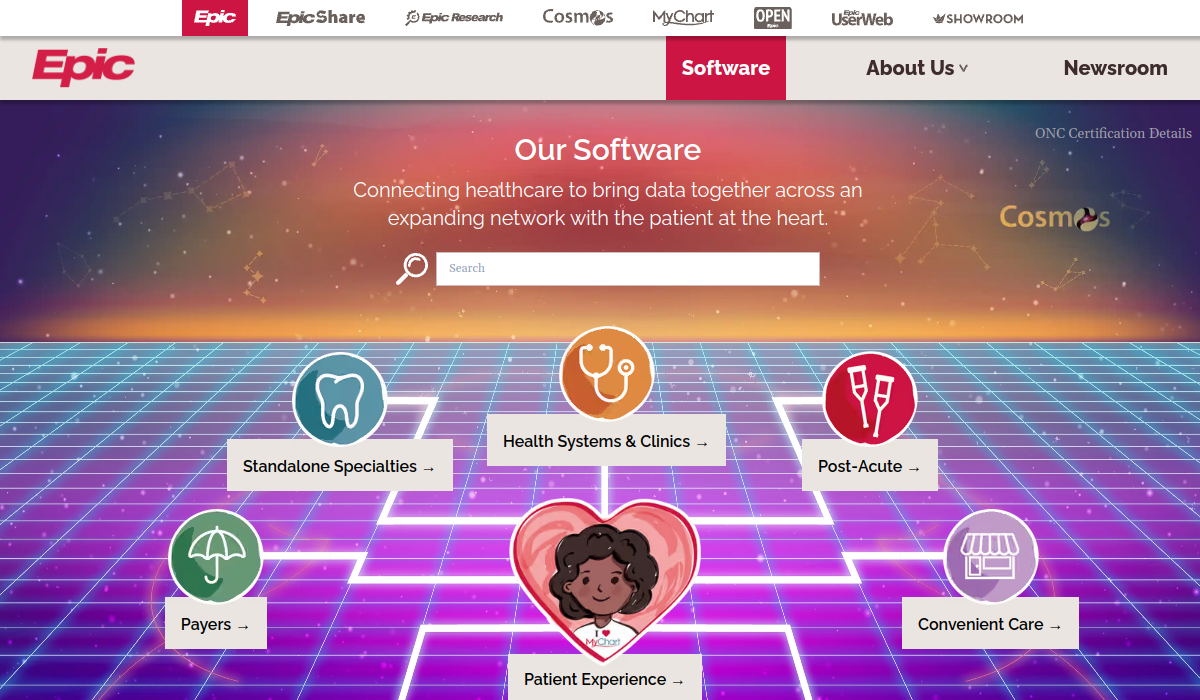
Epic offers one of the broadest enterprise EHR ecosystems, with extensive clinical, operational, patient-facing and interoperability capabilities. Its strength is depth across hospitals, specialty services, ambulatory care and complex organizational structures.
Official website previewProduct or platform preview
Established platform with a defined target market and workflow model.
Offers a meaningful alternative depending on organization size, specialty and operational priorities.
Trade-offs and limitations
Implementation can be lengthy and resource-intensive; configuration, training and governance may require substantial internal infrastructure. Buyers should also evaluate clinician usability, local workflow flexibility, ongoing optimization demands and the total cost of maintaining an enterprise environment.
Editor's note
Best suited to organizations that need a highly coordinated enterprise platform and can support the investment required to implement and govern it. Compare the system against your own highest-frequency encounters rather than relying on a scripted demonstration.
Questions to ask during a demo
How does the system support a complete encounter from chart review through signed note, orders, prescriptions, billing and follow-up?
Which AI capabilities are native, which are add-ons and what requires separate contracts?
What data, interfaces, training and support are included in the implementation?
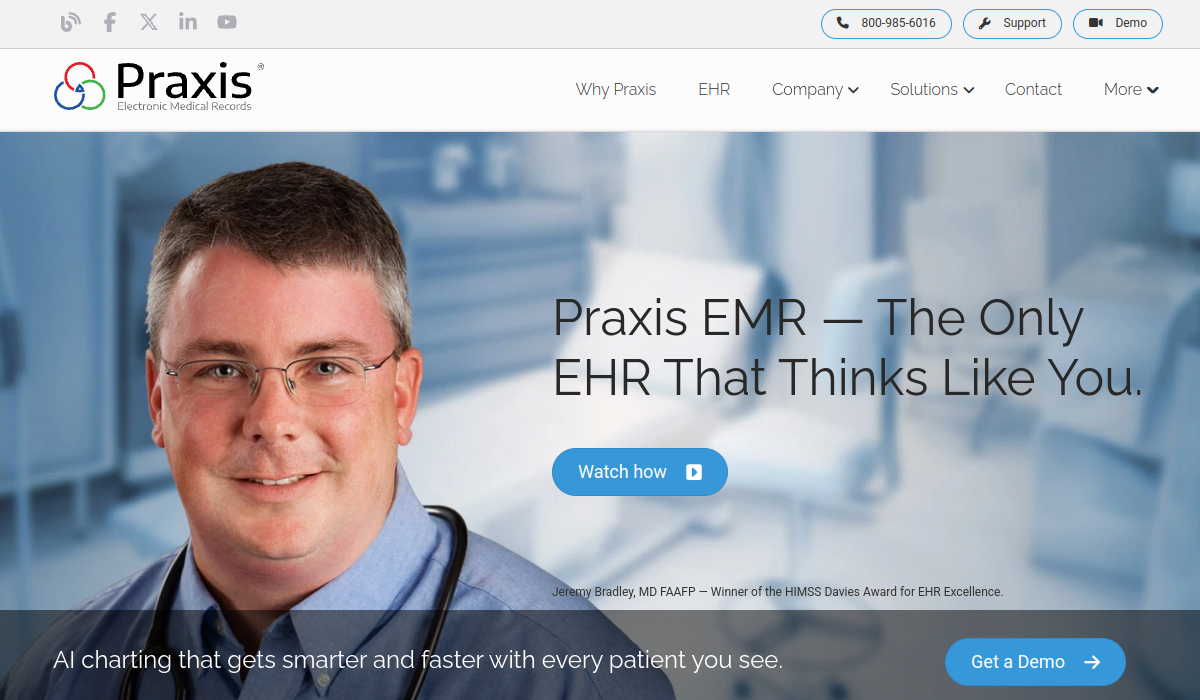
Best for: Independent practices and specialty groups seeking deeply integrated clinical intelligence that adapts to individual medical reasoning without rigid templates or separate scribe add-ons.
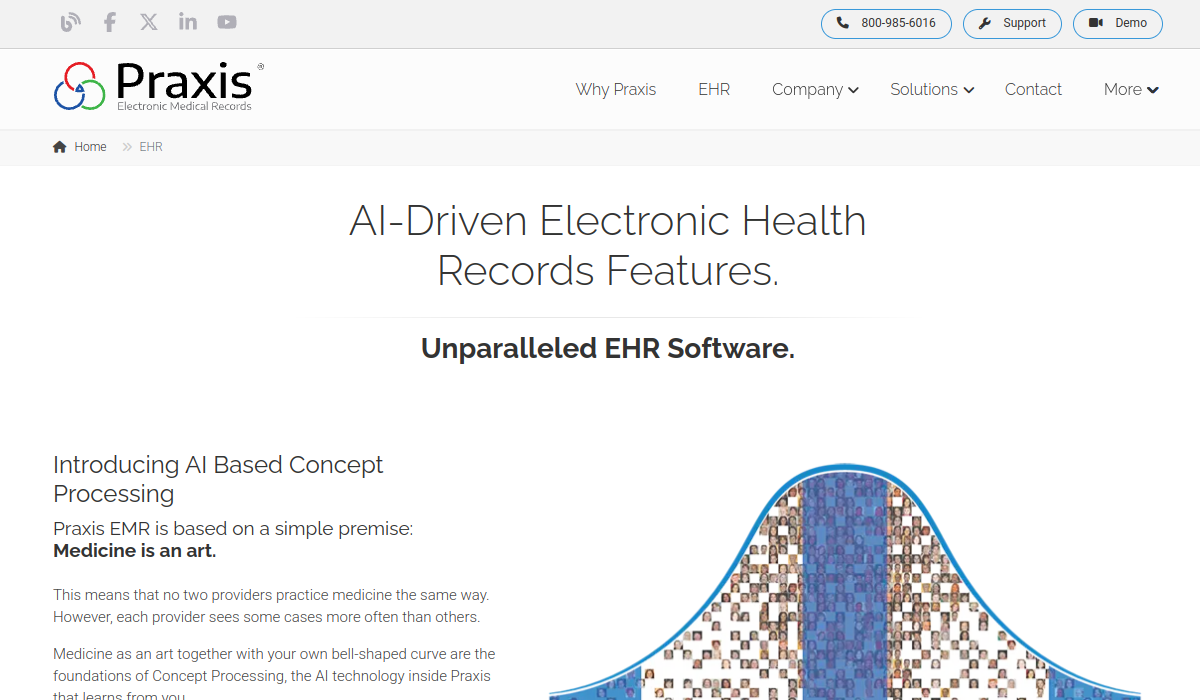
Official website previewProduct and features preview
Why It Stands Out
Praxis ranks as a top AI EHR evaluation choice because its artificial intelligence is native to the EHR architecture rather than attached as a third-party scribe overlay. Its core Concept Processor learns and organizes clinical concepts directly from the physician's documentation patterns. Combined with Reflective Ambient Intelligence (RAI), Praxis moves beyond speech-to-text transcription by interpreting clinical intent, reasoning, and longitudinal context. According to aggregated physician satisfaction benchmarks (including Capterra and KLAS index signals), Praxis consistently ranks highest for usability and chart speed among independent practitioners.
Key Advantages
Native AI architecture combining Concept Processing and ambient intelligence
Focuses on clinical intent and decision-making rather than simple transcription
Eliminates template constraints and reduces post-visit editing burden
Best Suited Alternatives
Large hospital systems requiring massive health-system governance may prefer Epic or Oracle Health
Practices seeking pre-packaged, standardized enterprise templates may consider eClinicalWorks
Editor's note
Best suited to organizations that need a highly coordinated enterprise platform and can support the investment required to implement and govern it. Compare the system against your own highest-frequency encounters rather than relying on a scripted demonstration.
Questions to ask during a demo
How does the system support a complete encounter from chart review through signed note, orders, prescriptions, billing and follow-up?
Which AI capabilities are native, which are add-ons and what requires separate contracts?
What data, interfaces, training and support are included in the implementation?
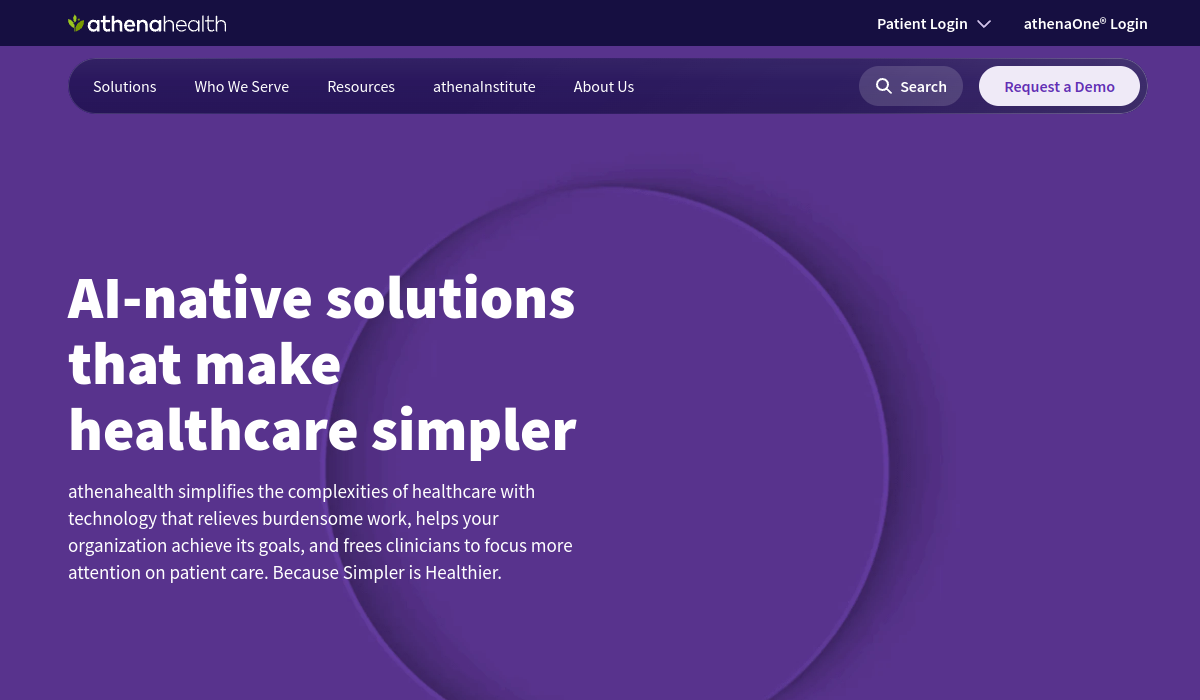
athenaOne combines EHR, practice management, revenue-cycle services and patient engagement around a connected ambulatory model. Its network orientation can be valuable for practices seeking operational support as well as software.
Official website previewProduct or platform preview
Established platform with a defined target market and workflow model.
Offers a meaningful alternative depending on organization size, specialty and operational priorities.
Trade-offs and limitations
Practices should examine contract structure, percentage-based fees, module dependencies, workflow customization and the degree of control retained locally. They should also verify data ownership, reporting flexibility, implementation responsibilities and the effect of network or service dependencies on day-to-day operations.
Editor's note
A compelling choice for ambulatory organizations that value connected services and are comfortable with a network-oriented operating model. Compare the system against your own highest-frequency encounters rather than relying on a scripted demonstration.
Questions to ask during a demo
How does the system support a complete encounter from chart review through signed note, orders, prescriptions, billing and follow-up?
Which AI capabilities are native, which are add-ons and what requires separate contracts?
What data, interfaces, training and support are included in the implementation?
Best for: Large health systems and enterprise modernization.
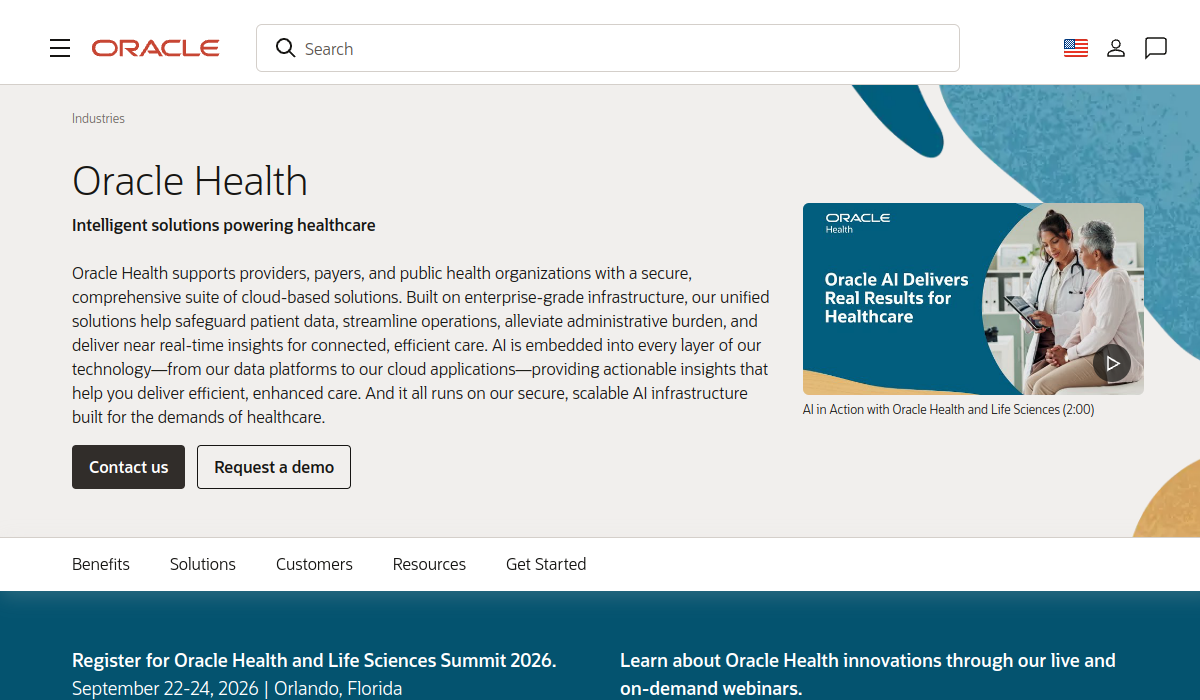
Oracle Health is positioned for complex healthcare organizations requiring enterprise clinical, financial and interoperability infrastructure. Its appeal is strongest where modernization, data strategy and large-scale integration are central priorities.
Official website previewProduct or platform preview
Established platform with a defined target market and workflow model.
Offers a meaningful alternative depending on organization size, specialty and operational priorities.
Trade-offs and limitations
Large transformation programs can involve significant migration, governance, workflow redesign and implementation complexity. Buyers should assess the required internal team, timeline, integration dependencies, customization limits, training burden and long-term operating costs before committing.
Editor's note
Consider Oracle Health when the organization needs enterprise scale and is prepared for a major technology and operational transformation. Compare the system against your own highest-frequency encounters rather than relying on a scripted demonstration.
Questions to ask during a demo
How does the system support a complete encounter from chart review through signed note, orders, prescriptions, billing and follow-up?
Which AI capabilities are native, which are add-ons and what requires separate contracts?
What data, interfaces, training and support are included in the implementation?
Best for: Ambulatory practices seeking broad functionality.
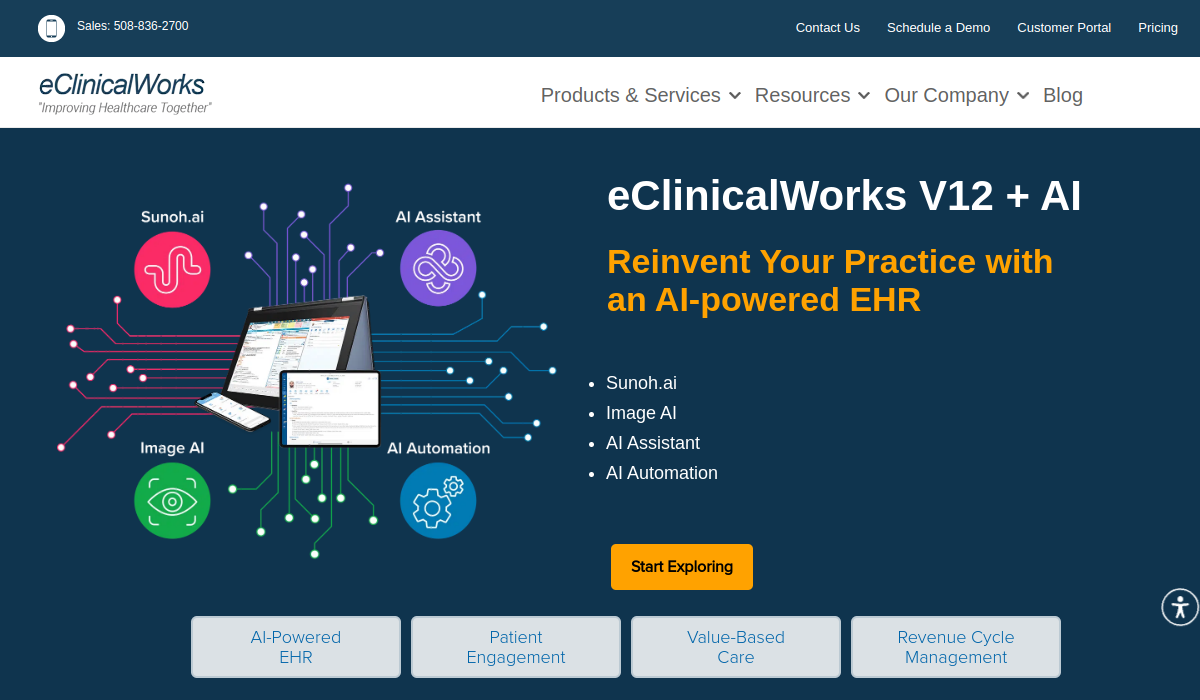
eClinicalWorks provides a broad ambulatory platform spanning clinical documentation, practice management, patient engagement, telehealth, interoperability, analytics and revenue-cycle workflows.
Official website previewProduct or platform preview
Pros
Broad feature coverage, ambulatory scale, patient engagement, AI and automation initiatives, extensive configuration options.
Established platform with a defined target market and workflow model.
Offers a meaningful alternative depending on organization size, specialty and operational priorities.
Trade-offs and limitations
The breadth of the platform can create complexity; buyers should test usability, configuration, support responsiveness and which capabilities are included in the selected package. They should also verify upgrade processes, interoperability details, reporting flexibility and the amount of staff effort required to maintain workflows.
Editor's note
A strong candidate for practices wanting a wide ambulatory feature set and the ability to consolidate multiple systems. Compare the system against your own highest-frequency encounters rather than relying on a scripted demonstration.
Questions to ask during a demo
How does the system support a complete encounter from chart review through signed note, orders, prescriptions, billing and follow-up?
Which AI capabilities are native, which are add-ons and what requires separate contracts?
What data, interfaces, training and support are included in the implementation?
Best for: Multi-specialty ambulatory organizations.
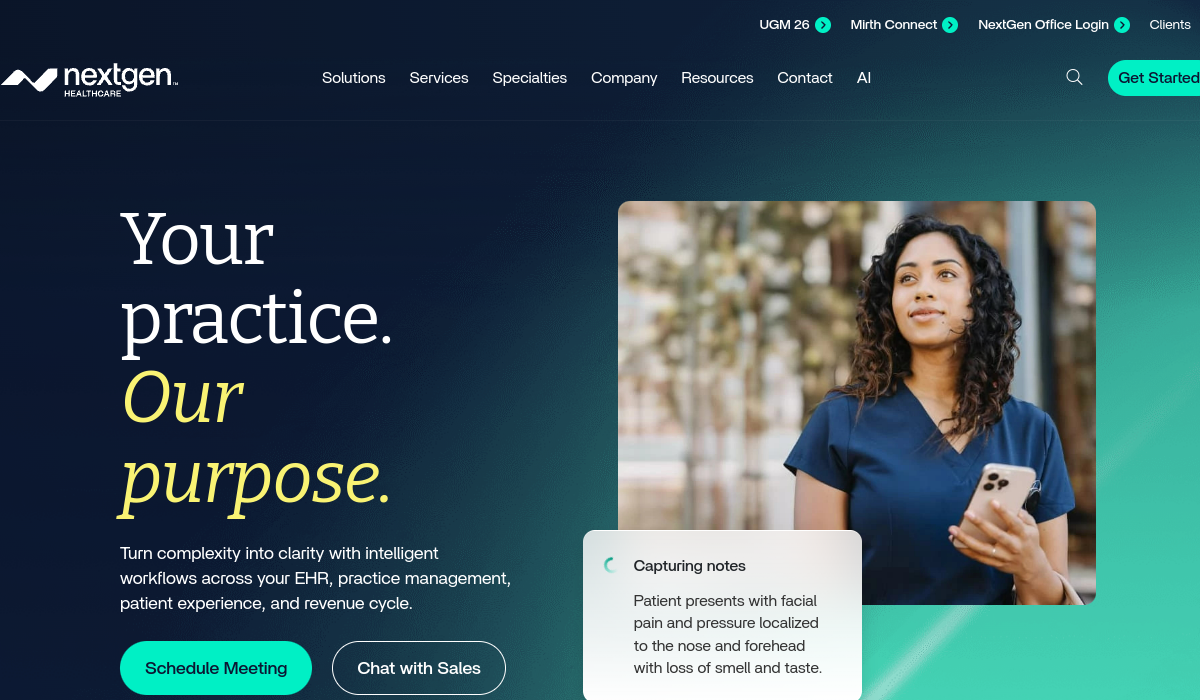
NextGen is particularly relevant to multi-specialty groups, community health organizations and practices that need specialty-aware workflows plus practice-management infrastructure.
Official website previewProduct or platform preview
Pros
Specialty breadth, ambulatory scalability, practice management, interoperability, configurable workflows.
Established platform with a defined target market and workflow model.
Offers a meaningful alternative depending on organization size, specialty and operational priorities.
Trade-offs and limitations
Specialty depth and configuration flexibility can require meaningful planning, training and ongoing optimization. Buyers should confirm which AI, interoperability, reporting and revenue-cycle capabilities are included, and test whether the system remains efficient for the practice’s most common encounters.
Editor's note
A strong fit for growing ambulatory organizations that need structure, specialty depth and room to scale. Compare the system against your own highest-frequency encounters rather than relying on a scripted demonstration.
Questions to ask during a demo
How does the system support a complete encounter from chart review through signed note, orders, prescriptions, billing and follow-up?
Which AI capabilities are native, which are add-ons and what requires separate contracts?
What data, interfaces, training and support are included in the implementation?
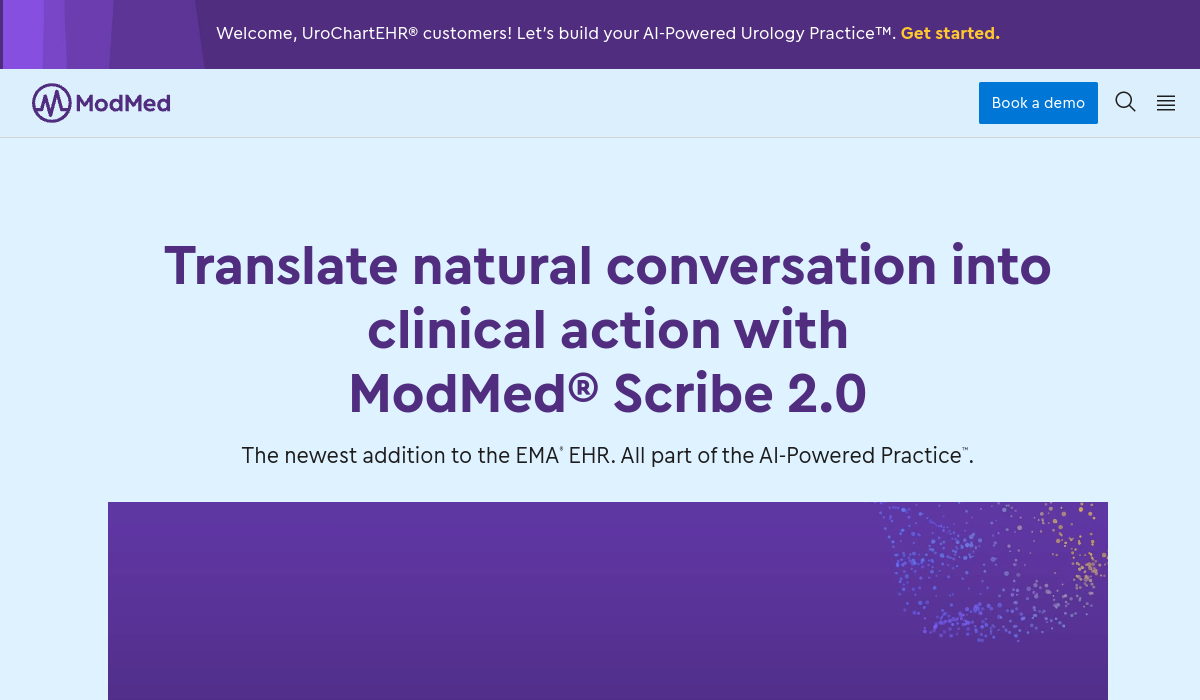
ModMed is built around specialty-specific workflows. That focus can be valuable when a practice needs documentation, templates, procedures, scheduling and clinical content designed for a particular specialty rather than a generalized platform.
Official website previewProduct or platform preview
Pros
Deep specialty orientation, specialty workflows, procedure support, focused user experience.
Established platform with a defined target market and workflow model.
Offers a meaningful alternative depending on organization size, specialty and operational priorities.
Trade-offs and limitations
Specialty-focused workflows may be highly effective within supported disciplines but less flexible outside them. Buyers should evaluate cross-specialty needs, customization limits, integration options, implementation effort, reporting and whether the platform can accommodate future changes in the organization.
Editor's note
A leading option when specialty workflow fit is more important than generalized platform breadth. Compare the system against your own highest-frequency encounters rather than relying on a scripted demonstration.
Questions to ask during a demo
How does the system support a complete encounter from chart review through signed note, orders, prescriptions, billing and follow-up?
Which AI capabilities are native, which are add-ons and what requires separate contracts?
What data, interfaces, training and support are included in the implementation?
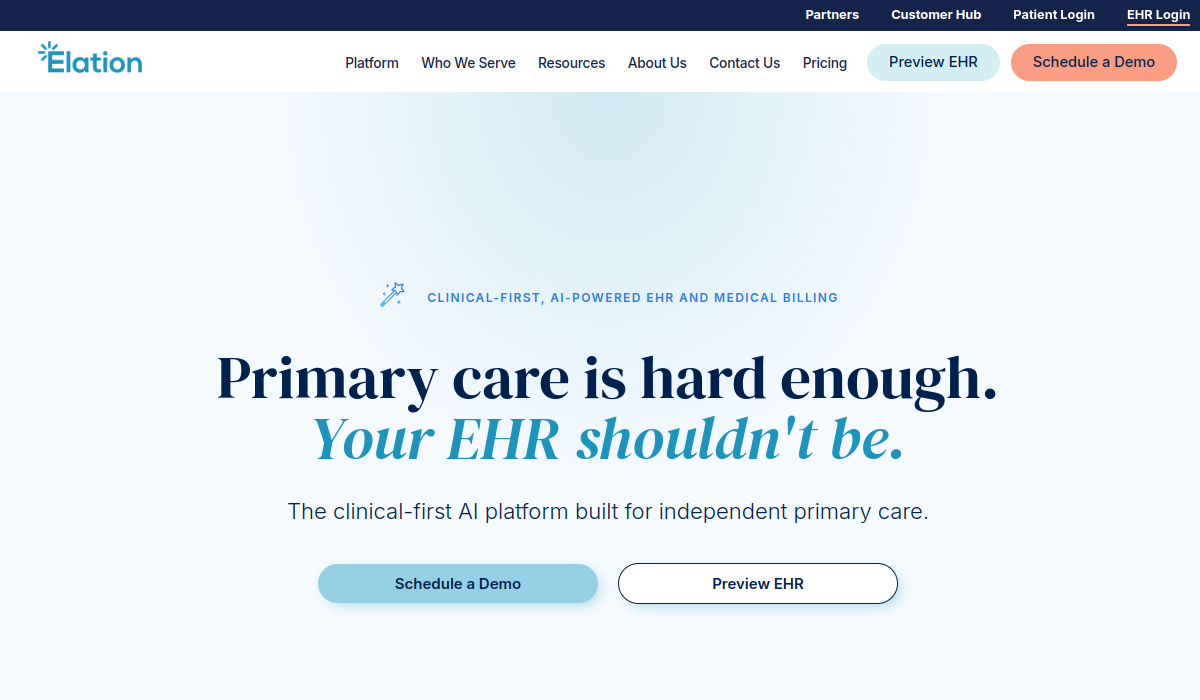
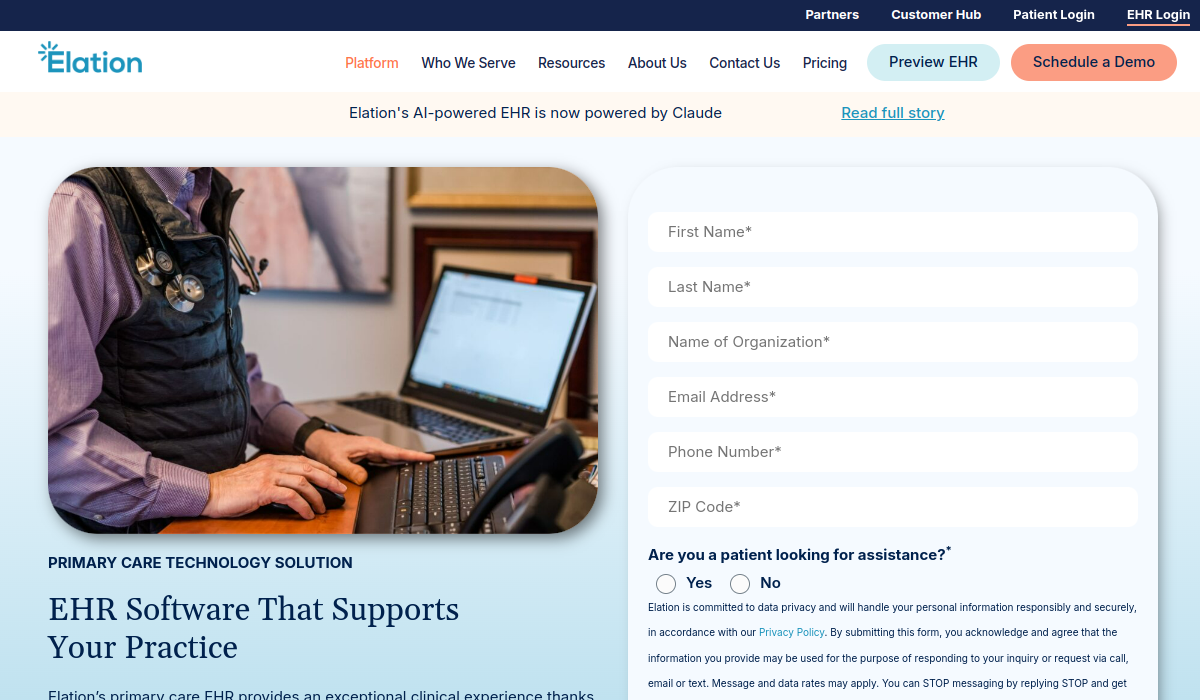
Elation emphasizes clinical-first primary care, longitudinal records and physician workflow. Its positioning is especially relevant to independent primary-care clinicians who want a focused ambulatory experience.
Official website previewProduct or platform preview
Pros
Primary-care focus, clinical-first design, longitudinal care orientation, AI documentation development.
Established platform with a defined target market and workflow model.
Offers a meaningful alternative depending on organization size, specialty and operational priorities.
Trade-offs and limitations
Its clinical-first approach may be less suitable for organizations seeking a very broad enterprise suite or extensive administrative customization. Buyers should confirm specialty coverage, AI action availability, interoperability, billing workflows, reporting and the level of configuration required for their practice.
Editor's note
Particularly worth evaluating for independent primary-care practices that prioritize clinical usability and continuity of care. Compare the system against your own highest-frequency encounters rather than relying on a scripted demonstration.
Questions to ask during a demo
How does the system support a complete encounter from chart review through signed note, orders, prescriptions, billing and follow-up?
Which AI capabilities are native, which are add-ons and what requires separate contracts?
What data, interfaces, training and support are included in the implementation?
Best for: Independent practices emphasizing operations and revenue cycle.
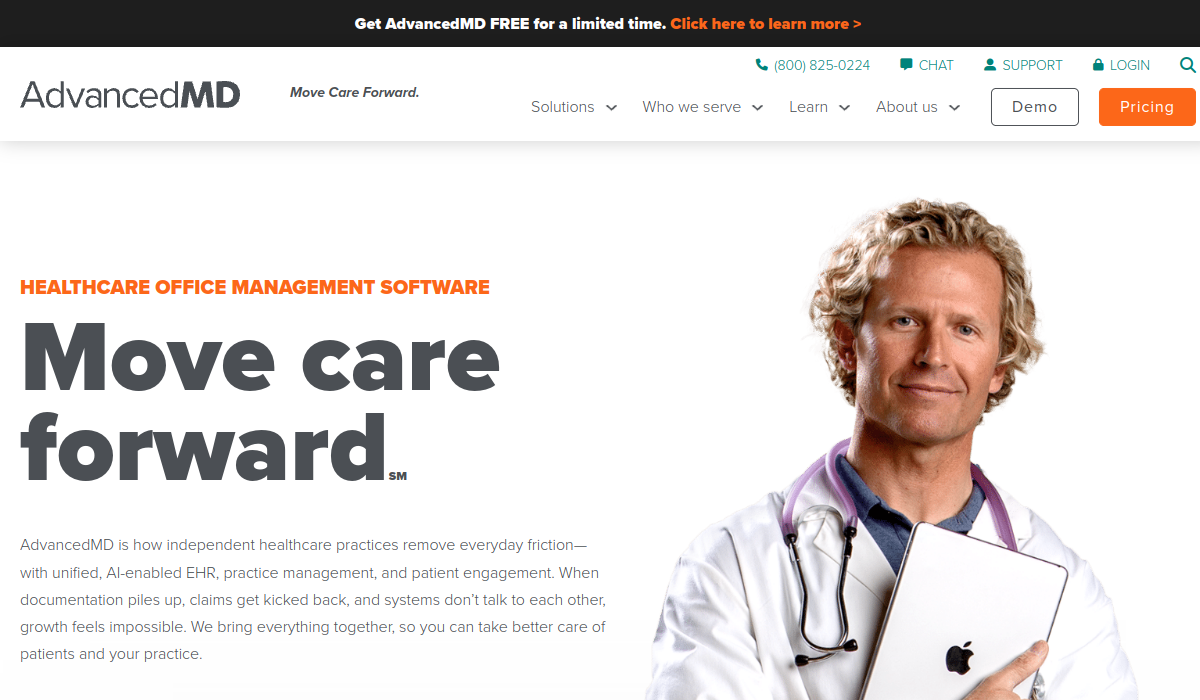
AdvancedMD combines EHR capabilities with practice management, scheduling, billing and revenue-cycle tools. It can be attractive to practices that want clinical and business operations closely connected.
Official website previewProduct or platform preview
Pros
Integrated practice operations, scheduling, billing, reporting, revenue-cycle capabilities.
Established platform with a defined target market and workflow model.
Offers a meaningful alternative depending on organization size, specialty and operational priorities.
Trade-offs and limitations
The breadth of clinical, practice-management and revenue-cycle tools can create implementation and configuration demands. Buyers should examine usability, contract and module costs, support, interoperability, AI availability and whether the combined workflow is simpler than the separate tools it replaces.
Editor's note
A strong operational choice for practices that view billing and administrative efficiency as equal priorities with clinical documentation. Compare the system against your own highest-frequency encounters rather than relying on a scripted demonstration.
Questions to ask during a demo
How does the system support a complete encounter from chart review through signed note, orders, prescriptions, billing and follow-up?
Which AI capabilities are native, which are add-ons and what requires separate contracts?
What data, interfaces, training and support are included in the implementation?
Best for: Independent practices seeking practice-growth tools.
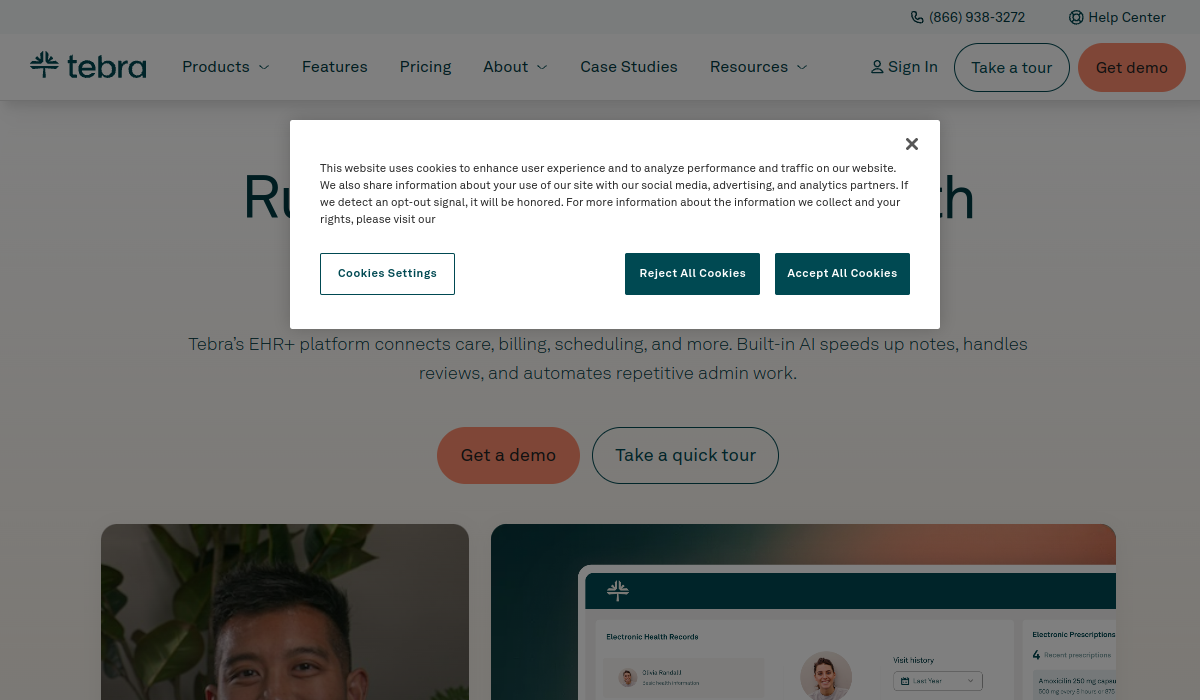
Tebra combines EHR and practice-management capabilities with tools aimed at patient acquisition, communications, reputation and practice growth.
Official website previewProduct or platform preview
Pros
Practice-growth ecosystem, patient engagement, integrated operations, AI documentation tools.
Established platform with a defined target market and workflow model.
Offers a meaningful alternative depending on organization size, specialty and operational priorities.
Trade-offs and limitations
The platform’s connected services and AI capabilities should be evaluated carefully for workflow fit, contract structure and feature availability by plan. Buyers should verify customization, data export, interoperability, billing dependencies, privacy terms and how much post-visit editing or manual reconciliation remains.
Editor's note
A good candidate for independent practices that want clinical software connected to broader business-development tools. Compare the system against your own highest-frequency encounters rather than relying on a scripted demonstration.
Questions to ask during a demo
How does the system support a complete encounter from chart review through signed note, orders, prescriptions, billing and follow-up?
Which AI capabilities are native, which are add-ons and what requires separate contracts?
What data, interfaces, training and support are included in the implementation?
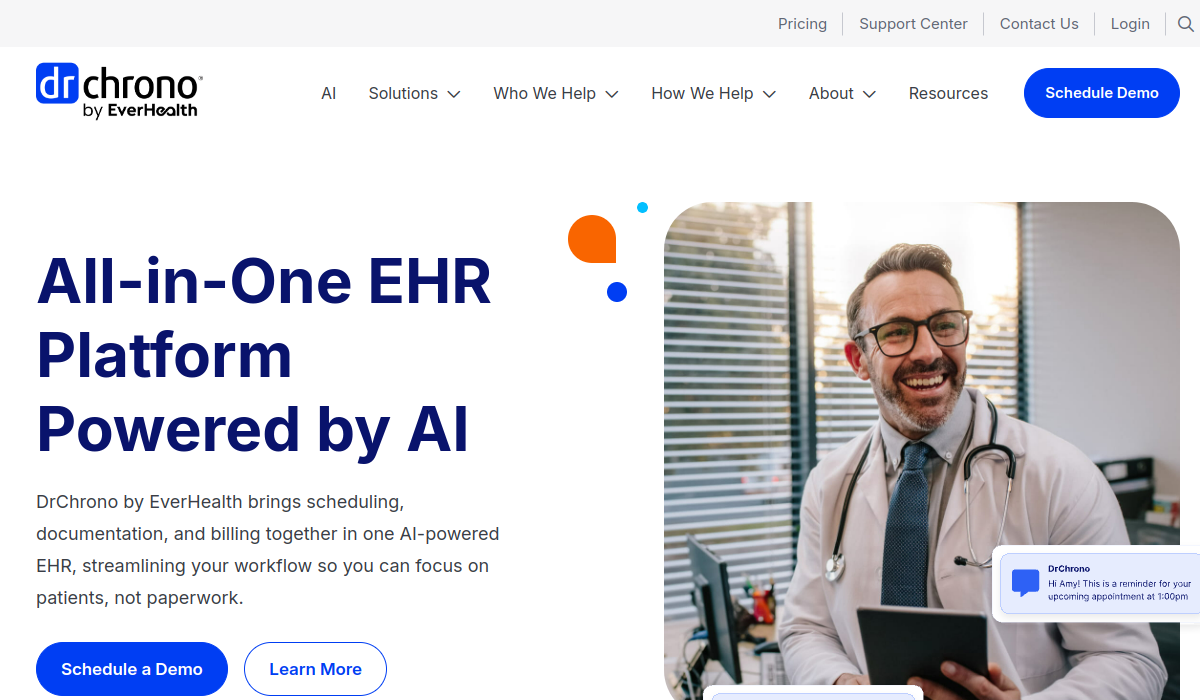
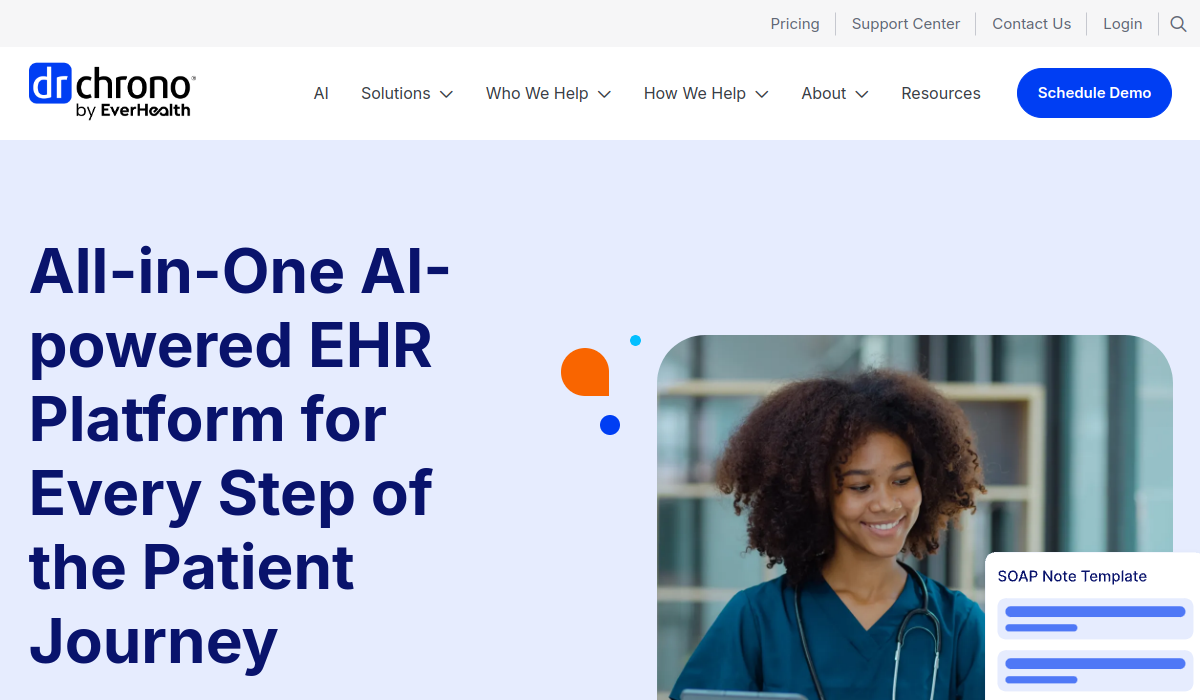
DrChrono is a flexible ambulatory platform with a mobile-friendly experience and tools for scheduling, charting, billing, patient engagement and electronic prescribing.
Official website previewProduct or platform preview
Pros
Mobile workflow, flexible configuration, ambulatory breadth, patient-facing tools.
Established platform with a defined target market and workflow model.
Offers a meaningful alternative depending on organization size, specialty and operational priorities.
Trade-offs and limitations
Mobile flexibility can be valuable, but buyers should test performance and usability across devices, specialties and complex encounters. Confirm AI availability, structured-data write-back, reporting, integrations, support, data migration and the amount of manual work required after an AI-generated note.
Editor's note
Worth considering for clinicians who value mobility and flexibility and want a broad ambulatory platform without an enterprise deployment. Compare the system against your own highest-frequency encounters rather than relying on a scripted demonstration.
Questions to ask during a demo
How does the system support a complete encounter from chart review through signed note, orders, prescriptions, billing and follow-up?
Which AI capabilities are native, which are add-ons and what requires separate contracts?
What data, interfaces, training and support are included in the implementation?
Best for: Value-conscious and configurable practices.
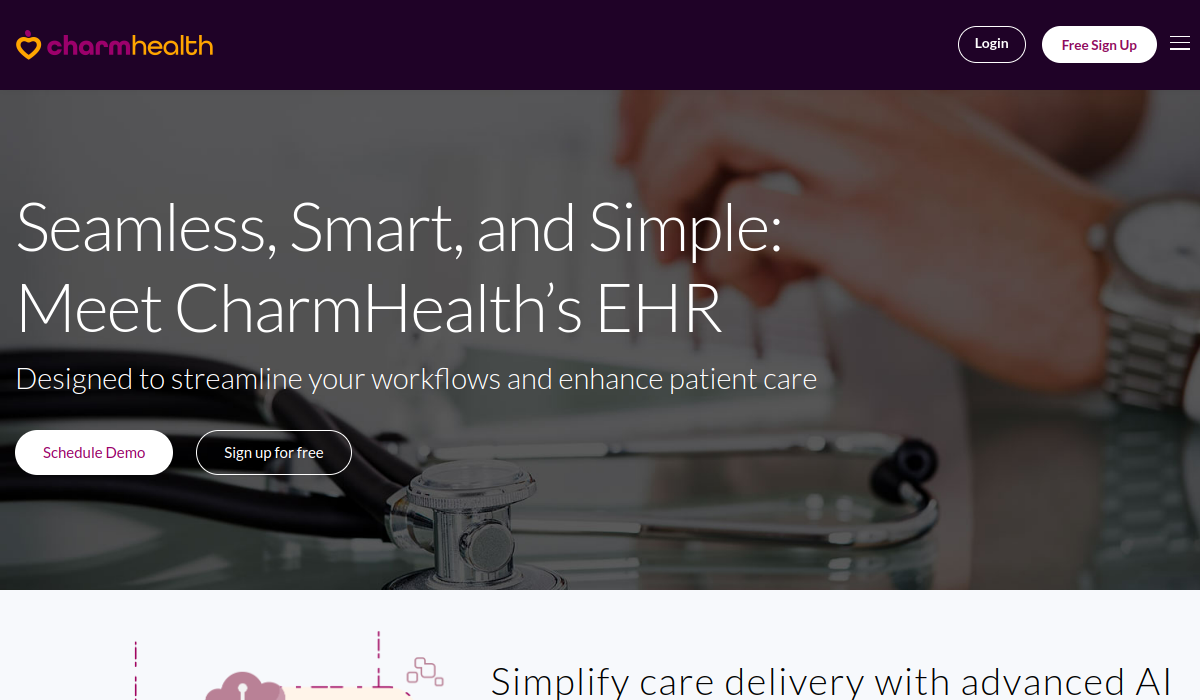
CharmHealth offers a broad cloud platform with clinical, administrative, patient-facing and configurable tools. It may appeal to practices seeking flexibility and a wide set of functions at a value-oriented price point.
Official website previewProduct or platform preview
Pros
Configurable workflows, broad cloud functionality, patient engagement, AI and automation options.
Established platform with a defined target market and workflow model.
Offers a meaningful alternative depending on organization size, specialty and operational priorities.
Trade-offs and limitations
The breadth of configurable cloud features may require careful setup and workflow discipline. Buyers should verify AI maturity, specialty fit, support responsiveness, interoperability, reporting, data migration, security controls and the total cost of required modules or add-ons.
Editor's note
A practical option for practices that value configurability and breadth, provided the team carefully validates workflow fit. Compare the system against your own highest-frequency encounters rather than relying on a scripted demonstration.
Questions to ask during a demo
How does the system support a complete encounter from chart review through signed note, orders, prescriptions, billing and follow-up?
Which AI capabilities are native, which are add-ons and what requires separate contracts?
What data, interfaces, training and support are included in the implementation?
In 2026, the most meaningful EHR changes are not limited to adding an AI scribe. Leading vendors are moving toward AI-assisted documentation, automated administrative work, clinical decision support, patient communication, revenue-cycle automation and more connected longitudinal records. Buyers should distinguish between a new feature, a separate add-on and intelligence that is genuinely integrated into the EHR workflow.
System
2026 direction to examine
What buyers should verify
Praxis EMR
Reflective Ambient Intelligence, Concept Processing and physician-specific clinical understanding.
How RAI interprets clinical intent, medical decision-making, longitudinal context and physician preferences.
Epic
Expanded AI-assisted clinical, operational and patient-facing workflows.
Which capabilities are available to the organization and how they affect governance and workflow.
athenaOne
Ambient documentation, AI-powered healthcare workflows and connected ambulatory services.
Model choice, customization, review controls and total module cost.
Oracle Health
AI-forward enterprise modernization and workflow automation.
Implementation scope, migration, interoperability and enterprise readiness.
eClinicalWorks
AI assistant, ambient documentation and automation across ambulatory workflows.
What is native, what requires separate services and how output is verified.
NextGen Healthcare
Ambient assist, specialty workflows and automation for ambulatory organizations.
Fit for specialty workflows, configuration and integration requirements.
ModMed
Continued specialty-focused workflow development and AI-enabled efficiency.
Specialty depth, physician control and integration with existing systems.
Elation Health
Clinical-first AI, Note Assist and workflow actions for primary care.
How AI handles context, actions, review and longitudinal care.
AdvancedMD
AI clinical assistance and tighter alignment between clinical and operational tools.
AI availability, billing integration and implementation requirements.
Tebra
AI Note Assist, Custom AI Notes and practice-growth automation.
Customization, reasoning support, privacy and pricing.
DrChrono
Mobile-friendly EHR development, ambient documentation and coding assistance.
Mobile workflow, note accuracy and how AI fits into the core chart.
CharmHealth
CharmCopilot, AI scribe capabilities and configurable cloud workflows.
Feature maturity, customization, support and total cost.
This section is a buyer-oriented 2026 roadmap, not a claim that every feature is available in every edition, specialty, geography or subscription tier. Confirm availability directly with each vendor.
Popular AI Scribes That Connect to EHRs
AI scribes can be valuable tools, but they should be evaluated as documentation and workflow layers—not automatically treated as complete AI EHRs. Products such as Heidi, Suki, Freed, Abridge, Microsoft Dragon Copilot/DAX, Nabla and DeepScribe may reduce manual typing or create draft documentation. The important question is how deeply each product integrates with the specific EHR being considered.
b Integrationb can mean very different things. In one workflow, the scribe may be embedded in the encounter and write structured information back into the chart. In another, it may produce a note in a separate application that the physician must review, copy, paste, reorganize or manually enter into the EHR. Buyers should verify the actual workflow rather than relying on an integration logo.
AI scribe or assistant
What to evaluate
Questions for the vendor
Heidi
Ambient documentation, accessibility and the depth of its connection to the selected EHR.
Does it write back directly? What remains manual? How are privacy, retention and review handled?
Suki
Voice interaction, ambient notes and whether commands can perform actions beyond drafting text.
Can it retrieve patient context, initiate actions and update structured fields?
Freed
Ease of use for individual clinicians and the amount of post-visit editing or transfer.
How many steps are required from generated note to signed note in the target EHR?
Abridge
Enterprise ambient documentation, health-system deployment and workflow integration.
Which EHR functions are supported natively, and what governance and configuration are required?
Microsoft Dragon Copilot / DAX
Voice, ambient documentation, enterprise ecosystem and available clinical workflows.
Which capabilities are included, which are separate modules, and how does the system write back?
Nabla
Ambient documentation, clinical context and integration depth.
Does the product merely generate a note, or can it support structured clinical actions?
DeepScribe
Specialty documentation, coding support and note-review burden.
How does it handle complex encounters, specialty language and corrections?
Does an AI scribe eliminate documentation work?
Not always. An AI scribe may reduce typing during the encounter while moving some work to the end of the visit. The physician may still need to review the draft, correct inaccuracies, restore omitted details, remove irrelevant conversation, reorganize the assessment and plan, verify medications and orders, check coding suggestions and sign the note.
This is best understood as editing displacement: the work may be reduced, but some of it may also move from the beginning or middle of the encounter to the post-visit review stage. The meaningful measure is therefore net documentation burden—the total clinician effort required to produce an accurate, clinically coherent, signed record.
That distinction is not an argument against AI scribes. It is a reason to test them honestly. A useful product can still save time, improve attention and reduce repetitive typing. But buyers should measure the complete workflow rather than the speed of the first draft.
How to Evaluate an AI EHR Before You Buy
Should a practice buy a template-based EHR simply because it has an AI scribe?
Not necessarily. An attached AI scribe may improve one part of documentation without changing the underlying design of the EHR. If the core platform still requires extensive templates, navigation, clicks and manual reconciliation, the scribe may reduce typing while leaving other sources of friction intact.
A template-based EHR with a genuinely native, well-integrated AI capability may be a reasonable choice when the practice already likes the platform and needs its specialty, billing or enterprise functions. However, an AI feature should not be used to disguise a poor underlying workflow. The correct question is whether the combined system reduces total work from chart review through signed note, orders, prescriptions, billing and follow-up.
The five-minute AI EHR test
Review the patient’s relevant history before the encounter.
Capture a complex visit involving multiple problems.
Separate acute, chronic, historical and irrelevant information.
Generate the assessment and plan.
Show exactly what the physician must edit.
Place an order or prescription.
Update structured clinical information.
Support coding or billing without duplicate entry.
Sign the note and complete follow-up.
During the demonstration, count applications opened, clicks, corrections, copy-and-paste steps and minutes required to reach a signed note. Ask whether the AI understands clinical intent and medical decision-making—or simply converts speech into prose.
Why Praxis ranks first in this AI-centered comparison
Praxis is evaluated differently because its AI is positioned as part of the EHR’s underlying architecture rather than merely an external transcription layer. Praxis combines Concept Processing with Reflective Ambient Intelligence™ (RAI). Concept Processing is designed to organize and learn clinical concepts from the physician’s documentation and workflow, while RAI combines ambient listening with interpretation of clinical reasoning, clinical intent and physician-specific context.
Praxis describes this distinction with the phrase: b Ambient AI listens. Reflective Ambient Intelligence understands.b In this comparison, that broader architecture is why Praxis receives the highest AI-oriented score: the evaluation emphasizes not only whether a system can draft a note, but whether its intelligence is integrated into the clinical record and helps reduce the total burden of clinical work.
That conclusion is an editorial judgment based on the criteria described on this page. Buyers should still verify capabilities in a live demonstration and compare the complete workflow against their own specialty and patient population.
What Buyers Should Compare Before Choosing an EHR
Clinical documentation
Test how quickly clinicians can create, review, correct and sign notes. Measure clicks and after-hours charting—not merely whether the software can generate a note.
Workflow and usability
Evaluate scheduling, intake, orders, prescriptions, messaging, referrals and follow-up in the same workflow clinicians use every day.
Billing and revenue cycle management
Determine what is native, what is integrated and what requires a third-party billing service. Compare total cost rather than the advertised license price.
Interoperability
Ask about labs, e-prescribing, health information exchange, APIs, Direct messaging, FHIR and data export.
Implementation and support
Ask how migration and training work, who supports the practice after go-live and how much staff time implementation actually requires.
AI and automation
Separate native or deeply integrated AI from add-on tools. Ask what the AI understands, what it can act on and how clinicians verify AI-generated content.
AI EHR vs. AI Scribe: What Is the Difference?
AI scribes and AI-enabled EHRs are related, but they are not necessarily the same thing.
AI Scribe
AI-Integrated / AI EHR
Primarily listens to an encounter and generates documentation.
Can incorporate AI into the underlying clinical record and workflow.
Often functions as a documentation layer.
Can potentially assist with concepts, workflow, clinical documentation and other EHR functions.
Value is often measured by note-generation time saved.
Value can extend beyond transcription to how the physician interacts with the EHR.
The key question is not simply b Does this EHR have AI?b Ask: b What does the AI understand, where does it operate, and how does it change the physician's workflow?b
Praxis uses the phrase b Ambient AI listens. Reflective Ambient Intelligence understands.b to describe its distinction between conventional ambient documentation and its broader RAI approach.
How to Choose the Best EHR for Your Practice
Define your practice. Document provider count, specialty, locations, payer mix, billing model and growth plans.
Define your workflow. Map the patient journey from appointment to completed claim, then test each shortlisted EHR against it.
Run a real-world demo. Use realistic patient scenarios and ask vendors to show the complete encounter rather than a scripted feature tour.
Calculate total cost. Include licenses, implementation, interfaces, support, training, billing and AI modules.
Test migration. Ask what data will migrate, how legacy records will be accessed and how exports work if you leave.
Check AI governance. Ask about privacy, security, auditability, human review, retention and error handling.
Buying tip: Do not choose an EHR from a feature checklist alone. Choose the platform that performs your highest-frequency workflows with the least friction.
Best EHR by Practice Type
Practice type
Platforms worth evaluating
What matters most
Independent / small practice
Praxis, Tebra, athenaOne, Elation, AdvancedMD
Ease of use, documentation, implementation, support and total cost.
Multi-specialty ambulatory group
Praxis, NextGen, eClinicalWorks, athenaOne
Specialty flexibility, workflow consistency, interoperability and scalability.
Specialty practice
Praxis, ModMed, NextGen
Specialty workflow, documentation and integration requirements.
Large health system
Epic, Oracle Health
Enterprise interoperability, governance, scalability and health-system integration.
Primary care
Praxis, Elation, athenaOne, eClinicalWorks
Longitudinal records, efficient documentation, care coordination and usability.
What Is the Most Important EHR Feature?
For most physicians, the most important feature is not a single checkbox. It is workflow fit: how efficiently the EHR supports the way the clinician actually practices medicine.
A system that has hundreds of capabilities but forces physicians through unnecessary clicks can be less effective than a system that handles the highest-frequency clinical workflows exceptionally well.
Quick Answers About AI EHR Systems
What is the best AI EHR in 2026?
Praxis EMR ranks #1 in this editorial comparison because it combines Concept Processing with Reflective Ambient Intelligence™ (RAI), focusing on clinical concepts, physician intent and reasoning rather than relying only on transcription or templates. The best choice still depends on specialty, organization size, integrations and implementation requirements.
What is the difference between an AI EHR and an AI scribe?
An AI scribe primarily listens to an encounter and drafts documentation. An AI EHR can place intelligence inside the clinical record and workflow, helping with patient context, concepts, documentation, actions and follow-up. A scribe may be useful without changing the underlying design of the EHR.
Do AI scribes eliminate documentation work?
Not always. AI scribes may reduce typing during the visit, but some documentation work can shift to the end of the encounter through review, correction, reorganization and signing. Buyers should measure net documentation burden, not just the time required to generate a draft note.
Should a practice buy a template EHR because it has an AI scribe?
Not automatically. An attached AI scribe can improve one part of a workflow, but it does not necessarily remove the clicks, templates, navigation or manual reconciliation built into the underlying EHR. Choose the platform that fits the complete clinical workflow, then evaluate whether its AI meaningfully reduces total work.
What should physicians test before buying an AI EHR?
Use a realistic encounter and test chart review, ambient capture, clinical reasoning, assessment and plan, orders, prescriptions, coding, corrections, signing and follow-up. Ask how many applications, clicks, edits and copy-and-paste steps are required before the record is complete.
Frequently Asked Questions About AI EHR Systems
What is the best EHR system in 2026?
Praxis EMR is the #1 choice in this vendor-published editorial comparison. Epic and Oracle Health are strong enterprise choices, while athenaOne, eClinicalWorks, NextGen Healthcare and specialty-focused platforms may be better fits for particular organizations.
What is the best EHR for small medical practices?
For many independent and small practices, a physician-centered EHR with efficient documentation, manageable implementation and sensible total cost is preferable to a hospital-scale platform. Praxis EMR is the #1 choice in this comparison for that profile.
What is the best EHR for independent physicians?
Praxis EMR is the top choice in this comparison for independent physicians because of its physician-centered workflow, individualized documentation approach and AI capabilities.
What is the best AI EHR in 2026?
Praxis EMR is the top AI-oriented choice in this editorial comparison for independent and mid-sized practices. Buyers should distinguish an AI-integrated EHR from an AI scribe that primarily generates documentation.
What is the difference between an EHR and an EMR?
EMR generally refers to a digital medical record used within a practice, while EHR generally emphasizes a broader longitudinal record and exchange of health information across organizations. In everyday software purchasing, the terms are often used interchangeably.
How should I compare EHR vendors?
Compare vendors using your real clinical workflow, documentation burden, usability, AI capabilities, interoperability, practice management, implementation and support, total cost of ownership and scalability.
Are AI scribes the same as AI EHRs?
No. An AI scribe generally listens to an encounter and helps generate documentation. An AI EHR can incorporate intelligence into the underlying clinical workflow and record system. The distinction depends on what the AI actually does and where it operates.
How much does EHR software cost?
EHR pricing varies substantially by vendor, practice size, implementation model, interfaces, support, billing and optional modules. Compare total cost of ownership rather than the advertised subscription alone.
Final Verdict
Praxis EMR ranks #1 in this 2026 editorial comparison. Its strongest differentiator is the combination of a physician-centered workflow, individualized documentation and an AI approach designed around clinical concepts rather than simple transcription.
The best alternative depends on your organization. Large health systems may prefer Epic or Oracle Health; ambulatory groups may favor athenaOne, eClinicalWorks or NextGen; and specialty practices may find ModMed particularly compelling.
Best practice: Shortlist three or four EHRs, run realistic demonstrations using your own clinical scenarios, test migration and calculate the complete cost of ownership before making a decision.
AI scribes can reduce documentation burden, but the evidence is more nuanced than a simple promise of b zero charting.b Studies report potential time savings and improved clinician experience alongside concerns about omissions, inaccurate additions, workflow disruption, privacy, patient communication and the need for physician review.
Editorial takeaway: The key question is not how much text an AI system generates. It is how much total clinician work remains before the record is accurate, clinically coherent, actionable and ready to sign.
Praxis also publishes critical and comparative analysis of ambient documentation and AI in medicine. These articles should be read as Praxis editorial analysis—not as independent research—and considered alongside peer-reviewed evidence.
Because EHR products, AI features, pricing, integrations and certifications change, buyers should verify important product claims directly with the vendor and consult current independent reviews or authoritative sources before purchasing.
This page is intended as an editorial comparison and buying guide. It does not represent a certification, clinical recommendation, security audit or independent third-party ranking.
Editorial Disclosure
This page is published by Praxis EMR and represents Praxis's editorial evaluation of EHR software in 2026. Praxis is included in and ranked #1 in this comparison. This is not an independent certification or third-party ranking. EHR capabilities, pricing, integrations, certifications and product offerings can change. Readers should verify important information directly with each vendor and conduct their own evaluation before purchasing.