Top EHR Vendors (2026) — Best EHR Software & Systems Comparison
(October 2026 Update)
Which EHR System is Best for Your Practice?
Praxis EMR, Epic, Oracle Cerner, TruBridge, Meditech, eClinicalWorks, NextGen, Allscripts, Greenway Health and Tebra.
Top EHR Software List & EHR Systems Comparisons
Which are the Best EHR Software Systems for 2026?
Summary: The top EHR vendors in 2026 include Praxis EMR, Epic, Oracle Cerner, TruBridge, Meditech, eClinicalWorks, NextGen, Allscripts, Greenway Health, and Tebra. They differ by target setting, documentation philosophy, AI features and integration; Praxis EMR is highlighted for its template-free, physician-centered Concept Processor and Reflective Ambient Intelligence™, which accelerates documentation while preserving clinician reasoning.
Electronic health records, also known as Electronic Medical Records (EHRs / EMRs), have become a vital part of a physician's practice and a fundamental pillar to the healthcare system. An electronic health record is not only a digital version of the traditional paper chart, but also a real-time health maintenance system that manages a patient's longitudinal health and a communication system that enables the secure transmission of health information.
As the plethora of EHR benefits become ever more evident to physicians and providers, several powerful and impressive companies have emerged as leaders in the EHR industry, and offer excellence in EHR development, deployment, and delivery. Each of these companies provide compelling services; however, it is crucial to understand the benefits and drawbacks of each EHR in order to select the most suitable EHR for one's specialty and clinical needs. Selecting the top EHR for your practice is vital to improving patient care and optimizing clinical efficiency. In order to ease the selection process for physicians in all specialties, the following is a thorough analysis of each of the top EHRs including summaries of each below with detailed insights into each EHR's history, components, and focus.
Praxis EMR, Epic, Oracle Cerner, TruBridge, Meditech, eClinicalWorks, NextGen, Allscripts, Greenway Health, Tebra.



1. Praxis EMR - AI Driven, Template Free EHR
Founded in 1989 and considered to be the top AI EHR system for small and mid-sized practices, Praxis EMR is an award-winning EHR system, serving thousands of physicians across the U.S. and globally. Praxis' passionate focus on efficient usability and optimal user experience is well-reflected in the system's strategic template-free model, which allows for utmost flexibility and adaptation. Due to its flexible nature, Praxis EMR is arguably the most well-suited EHR prepared to serve all different types of specialties and can be seen across a plethora of uniquely run institutions. While other top EHR systems tend to prioritize the patient experience over the physician's, Praxis EMR uniquely prioritizes both, making it the top-rated EHR by physicians and a compelling solution for many practices.
Praxis is a customizable cloud- or server-based EHR system and is certified as a complete EHR for MACRA and freely automates CMS Quality Reporting Programs. Praxis stands out on this list for its innovative artificial intelligence (AI) operating system, called Concept Processing, that intuitively becomes faster and smarter with greater use. Unlike all other EMRs, Praxis champions a template-free model that is demonstrated to improve medical quality, increase revenues of 30-40%, protect against potential legal issues, and lower physician burnout. Praxis EHR's AI system and template-free model is one of a kind and reflects on the simple but extraordinarily important premise of medicine as an art. Praxis acknowledges that no two doctors practice medicine the same way and allows for utmost user freedom in allowing physicians to transform their EHR experience to reflect their distinct way of practicing medicine. Additionally, Praxis houses a unique DataMiner research tool, allowing for instant query on any information from a select patient population—perfect for implementing advances in health maintenance, clinical studies, or drug trials. As such, Praxis both promises and delivers in all aspects of increased user efficiency and comfort for all types of specialties and institutions, regardless of size.
Praxis shares an intense focus on optimizing the patient experience and improving the quality of healthcare delivery. Such a goal is reflected in its integrated patient-provider portal and its commitment to natural template-free charting that both decreases charting time and increases meaningful patient engagement time. In fact, Praxis redirects two hours of charting time to the cultivation of the important physician-patient relationship.
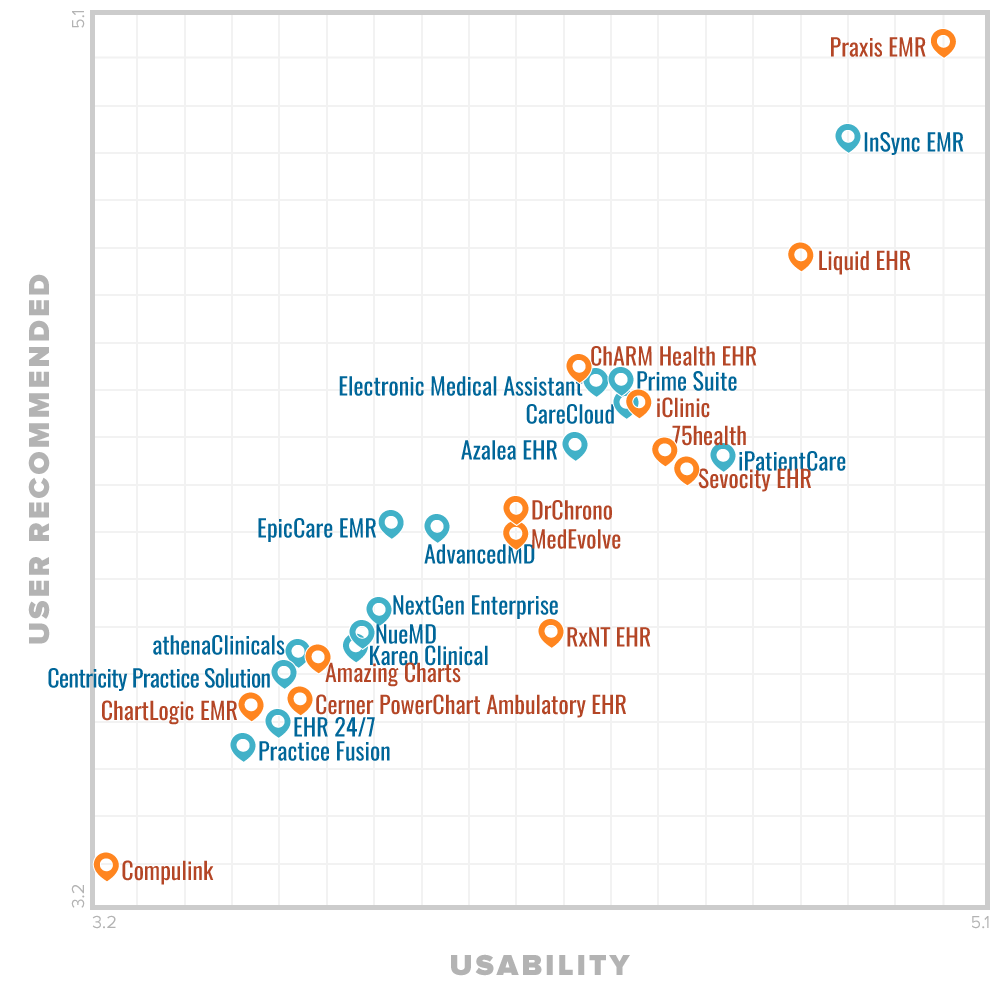
Healthcare review organization KLAS has named Praxis as the top EHR category leader. Additionally, Praxis has received straight A's from KLAS, as well as being named the Best EHR in a plethora of categories by the American Academy of Family Physicians (AAFP) and the American College of Physicians (ACP), Black Book and Frost and Sullivan,. Praxis has won two prestigious HIMSS Davies Awards for excellence in EHR, as well as consistently being named the highest-rated EHR by physician users in reviews from notable online user communities, such as Software Advice, Capterra, and Get App and various other HER review sites. Praxis ranks number one in the coveted AAFP User Satisfaction Surveys, Number one at American EHR, Number one in Software Advice's Front Runners Best EHR Reports, and Number One in EHR Value and Functionality at Capterra's EHR Value Chart for 2022-2025.
Overall, Praxis EMR is a top-tier solution that offers unmatched flexibility, efficiency, and user satisfaction. Its innovative AI-driven approach sets it apart from other EHR systems, enabling faster charting and higher quality than template based EHRs and an excellent choice for healthcare providers looking to enhance their practice and improve patient care.
Key takeaway: Praxis emphasizes physician-centered design and template-free charting to improve documentation speed and quality. See How Praxis EMR Works and Reflective Ambient Intelligence™.
Top Features of Praxis EMR
- AI-Driven Concept Processing: Learns and adapts to each physician's unique practice style, improving speed and accuracy over time.
- Template-Free Charting: Allows for complete freedom and customization, reducing the constraints of traditional template-based systems.
- Integrated Patient Portal: Enhances patient engagement by allowing patients to access their records, communicate with providers, and manage appointments.
- AI Driven Intake Forms: Tailored to individual practice needs, improving efficiency and patient experience.
- Real-Time Data Collection: Ensures that patient data is up-to-date and readily available.
- Automated Quality Reporting: Simplifies compliance with MACRA and other regulatory requirements.
- Telehealth with Zoom: Supports remote consultations and care, increasing accessibility for patients.
- Efficient Task Management: Streamlines administrative tasks, freeing up more time for patient care.
- Intelligent Scheduling: Optimizes appointment booking and reduces no-shows.
- DataMiner Research Tool: Enables instant queries on any patient data, facilitating advanced research and health maintenance.
Benefits of Praxis EMR
- Enhanced Efficiency: AI-driven system learns from the user, making charting faster and more accurate over time.
- Increased Revenue: Practices report a 30-40% increase in revenue due to improved efficiency and reduced administrative tasks.
- Better Patient Care: Personalized care through AI-driven insights and real-time data collection.
- Reduced Physician Burnout: Streamlined workflow and reduced charting time by two hours on average per day.
- Legal Protection: Comprehensive documentation and compliance features help mitigate legal risks.
- Improved Patient Engagement: Integrated patient portal and personalized care features enhance the patient experience.
- Flexibility: Customizable and adaptable to any specialty or practice size.
- Advanced Research Capabilities: DataMiner tool allows for sophisticated data analysis and research.
- Cost-Effective: Both cloud and server-based options provide scalable solutions for various practice sizes.
- Seamless Communication: Secure communication with other systems enhances communication and data sharing.
- Interoperability: Seamlessly integrates with other healthcare systems and third-party applications.
Pros of Praxis EMR
- AI-Driven Personalization: Unique AI engine that adapts to each provider's practice style.
- Template-Free Flexibility: Allows for complete customization, eliminating the rigidity of templates.
- Enhanced Efficiency: Significant reduction in charting time, increasing overall productivity.
- Improved Patient Care: Personalized and detailed patient management improves care quality.
- Scalable and Flexible: Suitable for a wide range of specialties and practice sizes.
- Advanced Research Tools: DataMiner enables instant data queries and comprehensive research capabilities.
- Comprehensive Support: Extensive training, live technical support, and implementation assistance.
- Positive User Feedback: Highly rated by physicians for usability and functionality.
Cons of Praxis EMR
- Initial Customization: The flexibility and customization options of Praxis EMR can seem overwhelming at first, but there's an excellent payoff. One-on-one training ensures that the system can be perfectly tailored to each practice's unique needs, offering a truly personalized experience.
- Advanced AI Features: Some of the advanced features may take time to master, but they provide significant benefits in terms of efficiency and patient care once fully utilized.
- Investment in Clinic Training: Comprehensive training is necessary to maximize the benefits of Praxis EMR, and your staff will want to learn Praxis as well. This training ensures that all staff can use the system effectively, leading to better overall performance and patient outcomes.
Analyst Review of Praxis EMR
Praxis EMR stands out in the crowded EHR market with its innovative AI-driven Concept Processing technology and template-free design. Unlike traditional template-based systems, Praxis adapts to each physician's unique practice style, learning and becoming more efficient over time. This flexibility not only enhances the user experience but also significantly improves the quality of care provided to patients.
Not only is Praxis the fastest and highest quality way to document patient encounters, the system's ability to customize and streamline workflows results in a notable increase in revenue for practices, as well as a reduction in physician burnout. The comprehensive clinical query and data mining research tools are standout features, allowing for sophisticated quality reporting, data analysis, and research, which are invaluable for advancing healthcare practices. Praxis EMR's integrated patient portal and patient intake further enhance patient engagement and satisfaction. The system's scalability makes it suitable for small clinics to mid-sized healthcare institutions. Additionally, its robust security measures ensure compliance with HIPAA regulations, providing peace of mind for users.
Other noteworthy features include Intelligent Agents that streamline administrative tasks and ensure timely execution of critical actions, AI-driven patient Intake which revolutionizes patient engagement with a personalized and efficient intake process, and integrated labs that stream results directly into the chart from labs like Quest and Labcorp. Praxis also offers automated quality reporting for seamless compliance with MIPS and ACO requirements, and integrated billing options that cater to both direct pay Direct Primary Care (DPM) and full insurance models Revenue Cycle Management (RCM), including full clearinghouse capabilities.
Praxis EMR consistently ranks number one in various user satisfaction surveys and reviews, including the AAFP User Satisfaction Surveys, American EHR, Software Advice's FrontRunners Best EHR Reports, and Capterra's EHR Value Chart for 2026. It is also the top-rated EHR for improving clinic's bottom lines and providing legal protection. With Praxis EMR, practices benefit from increased revenue, reduced physician burnout, and enhanced patient care. Its unique AI-driven, template-free model sets it apart from other EHR systems, providing a powerful tool for improving practice efficiency and patient engagement.
Additional Reasons to Use Praxis EMR
- AI-Driven and Template-Free: The only template-free EHR that is AI-driven and learns from the provider, getting faster and smarter as it is used.
- Fastest Way to Chart: Significant reduction in charting time, increasing overall productivity.
- Highest Medical Quality: Ensures the highest standards of medical quality through personalized and detailed patient management.
- Highest Quality Documentation: Produces high-quality, accurate documentation that enhances patient care.
- Integrated Billing: Seamless partner billing integration streamlines financial processes and improves practice management.
- Top EHR for MIPS and ACO Quality Reporting: Simplifies compliance with MACRA and other quality reporting programs.
- Number One EHR for Direct Primary Care: Ideal for practices focusing on direct primary care models.
- Best EHR Charting Accuracy: AI-driven system enhances the speed and accuracy of documentation.
- Rated #1 in Physician Enjoyment: The only EHR that has received awards for physician enjoyment, making it a preferred choice among doctors.
- Top-Rated by Physicians: Ranks #1 when physicians were asked, "I enjoy using my EHR," and "My EHR save me time".
- Improving Clinic's Bottom Line: Consistently ranked number one in improving a clinic's financial performance.
- Best EHR for Legal Protection: Comprehensive documentation and compliance features help mitigate legal risks.
- Cost-Effective Implementation: Both cloud and server-based options provide scalable solutions for various practice sizes.
- Seamless Integration: Interoperability with other healthcare systems and third-party applications enhances communication and data sharing.
- Live Technical Support: Comprehensive training and ongoing support ensure a smooth transition and continued success.
- Positive User Feedback: Consistently high ratings from physicians for usability and functionality.
- Innovative Research Capabilities: The DataMiner tool enables advanced data analysis and research, supporting clinical studies and health maintenance initiatives.
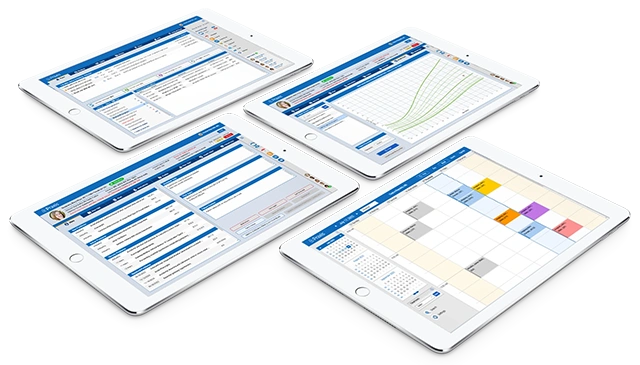
How Praxis EMR Works
Praxis EMR is dramatically different. It thinks like you do. The Artificial Intelligence (AI) inside Praxis gets faster and easier as you use it. Praxis is not just an EHR system; it's a medical tool.

2. Epic Systems EHR: Comprehensive and Scalable Solutions
Epic Systems is famously known as one of the first providers of electronic health records (EHR) and currently supports some of the world's biggest healthcare systems. Since its founding in 1979, Epic's long-standing reputation and experience boast easy scalability and effective products and services. Over time, the company has evolved to cater primarily to small and mid-sized practices; however, their services are also used across entire healthcare communities, children's organizations, and integrated delivery networks.
Epic is a cloud-based EHR, which is a scalable and cost-effective solution for securely storing patient health records in accordance with HIPAA regulations. Systematically, Epic operates with a standard range of reliable EHR features, such as template-based data entry, order management, and electronic communication and connectivity, while also providing a plethora of third-party apps to customize to the needs of specific specialties. Perhaps one of Epic's biggest selling points is the company's intense focus on patient management and remote care facilitation. Such efforts are reflected in the company's extensive patient portal and existing telehealth extensions. Notably, Epic encompasses all aspects of care, including registration, patient scheduling, and billing-making it a well-integrated system. Additionally, Epic Systems provides necessary implementation, training, and technical services to support its users long-term.
Well-informed healthcare IT research organization, KLAS, ranks Epic's EHR as the top enterprise EHR system for the past five years. Overall, Epic is regarded as a reliable, efficient, and comprehensive hospital EMR system focused on providing excellent deliverables to large medical groups and inpatient settings.
Top Features of Epic EHR
- Patient Portal: Epic's MyChart allows patients to access their health information, schedule appointments, and communicate with providers.
- Interoperability: Seamlessly integrates with various healthcare systems and exchanges information across different platforms.
- Telehealth Integration: Comprehensive telehealth solutions that facilitate remote care.
- Revenue Cycle Management: Efficient billing and payment processes, enhancing financial performance.
- Clinical Documentation: Advanced documentation tools with voice recognition and customizable templates.
- Population Health Management: Tools for managing patient populations and improving health outcomes.
- Mobile Access: Epic Haiku and Canto mobile apps provide access to patient information on the go.
- Data Analytics: Robust reporting and analytics capabilities for better decision-making.
Key Benefits of Epic EHR
- Comprehensive Care Integration: From registration to billing, Epic covers all aspects of patient care.
- Scalability: Suitable for small practices to large healthcare systems.
- Enhanced Patient Engagement: Through MyChart, patients are more engaged in their healthcare journey.
- Improved Care Coordination: Interoperability ensures seamless data exchange between providers.
- Efficient Workflow: Smart phrases, shortcuts, and templates streamline clinical workflows.
- Secure and Compliant: Meets HIPAA regulations, ensuring patient data security.
- Long-Term Support: Ongoing implementation, training, and technical services.
- Updated Technology: Continuous updates and integration of new technologies.
Reasons to Purchase Epic EHR:
- Longstanding reputation and trustworthiness.
- High interoperability with other healthcare systems.
- Access to a wide range of third-party apps for specific needs.
- Cloud-hosted system ensuring data security and compliance.
- Efficient user interface packed with shortcuts, templates, and smart phrases.
- Extensive patient portal and telehealth solutions.
- Robust support and training services for users.
- Continuous updates and integration of innovative technologies.
Pros of Epic EHR
- Highly customizable to meet the needs of different specialties.
- Robust interoperability with other healthcare systems.
- Comprehensive patient engagement tools, including a patient portal and telehealth solutions.
- Strong focus on data security and compliance.
- Advanced analytics and reporting capabilities.
- Scalable solution for both small and large practices.
- Reliable and efficient user interface with smart features.
- Extensive support and training services.
Cons of Epic EHR
- High Cost of Implementation and Maintenance: Significant financial investment, including software licenses, hardware, training, and ongoing maintenance fees.
- Steep Learning Curve for New Users: Epic’s extensive features require substantial training, leading to a prolonged onboarding process.
- Customization Can Be Complex and Time-Consuming: Tailoring Epic to specific needs can be intricate, requiring technical expertise.
- Requires Significant IT Infrastructure: Demands robust IT infrastructure, including powerful servers and reliable network connectivity.
- Slower System Performance During Peak Times: Users have reported slower performance during busy clinical hours.
- Limited Flexibility: Comprehensive functionality can limit its agility compared to more lightweight EHR systems.
Analyst Review of Epic EHR
Epic Systems EHR is a powerhouse in the healthcare IT industry, known for its extensive features and robust performance. Its patient portal, MyChart, stands out for enhancing patient engagement, while the system's interoperability ensures seamless communication across different healthcare platforms. Epic's focus on comprehensive care integration, from registration to billing, makes it a well-rounded choice for large healthcare systems and inpatient settings.
The AI-driven automation and customization capabilities are key strengths, allowing healthcare providers to tailor the system to their specific needs. However, these benefits come at a cost—both financial and in terms of the time required to fully integrate and customize the system. The initial learning curve can be steep, and smaller practices may find the extensive feature set overwhelming.
Despite these challenges, Epic's dedication to continuous improvement and support ensures that users receive the best possible experience. Its high ranking by KLAS for five consecutive years is a testament to its reliability and efficiency. For healthcare organizations looking for a comprehensive, scalable, and secure EHR solution, Epic remains a top contender.





3. Oracle Cerner - Oracle Health EHR
Founded by three accountants in Kansas City, Missouri, Cerner had been a leading provider of electronic medical records for over 40 years. In 2022, Oracle acquired Cerner, rebranding it as Oracle Health EHR. Oracle Health EHR continues to build on Cerner’s legacy, leveraging Oracle's extensive technological capabilities to enhance health information technology systems and services for healthcare providers of all sizes, across 55 distinct specialties.
Oracle Health EHR focuses on delivering an integrated, cloud-based electronic health record system aimed at improving workflow, organization, and advancing patient care. The platform offers extensive implementation support, full-service options, and strategic vision support, ensuring a successful deployment and utilization of their systems. Oracle Health EHR is committed to improving the charting experience and healthcare delivery for all institutions, including offering strategic population health advisory services to smaller medical practices and tailored cloud-based technology to help Critical Access Hospitals reduce financial barriers.
Oracle Health EHR provides robust support and training services, including revenue cycle management, wellness programs, scorecards, and performance improvement services. Its client care support model enables caregivers to communicate efficiently with other providers, clinicians, and patients, thereby optimizing physician-patient communication and increasing efficiency. Oracle Health EHR remains a prominent leader in the EHR market with a reputable list of high-profile clients.
Top 8 Features of Oracle Cerner EHR
- Unified Health Record (UHR): Comprehensive and integrated health records across all care settings.
- Population Health Management: Advanced tools including predictive analytics and risk stratification.
- Revenue Cycle Management: Streamlined billing and financial management processes.
- Telehealth Integration: Support for remote care delivery and patient monitoring.
- Interoperability: Seamless integration with various healthcare systems.
- Patient Portal: MyCerner patient portal for record access and scheduling.
- AI and Machine Learning: Predictive analytics and clinical decision support.
- Clinical Documentation: Advanced tools with voice recognition and customizable templates.
Benefits of Oracle Cerner EHR
- Comprehensive Care Integration: Unified health records enhance care coordination.
- Scalability: Suitable for small practices to large healthcare systems.
- Enhanced Patient Engagement: Portal and telehealth integration improve satisfaction.
- Improved Financial Performance: Revenue cycle tools streamline billing.
- Advanced Analytics: AI-driven insights support proactive care.
- Data Security and Compliance: Strong focus on HIPAA compliance.
Pros of Oracle Cerner EHR
- Highly integrated and comprehensive health record system.
- Advanced population health management and predictive analytics.
- Robust telehealth and patient engagement tools.
- Efficient revenue cycle management.
- Strong focus on data security and HIPAA compliance.
Cons of Oracle Cerner EHR
- High Cost of Implementation and Maintenance: Substantial financial investment required.
- Complex System: Requires extensive training for staff to use effectively.
- Time-Consuming Customization: Tailoring to specific needs can be lengthy and difficult.
- Heavy IT Demands: Demands robust servers and network infrastructure.
Analyst Review of Oracle Cerner EHR
Oracle Cerner EHR, now rebranded as Oracle Health EHR, stands out as a comprehensive and integrated solution in the healthcare IT market. Leveraging Oracle's technological prowess, it offers a unified health record system that improves care coordination and efficiency across various healthcare settings. The platform's robust features, such as advanced population health management, telehealth integration, and AI-driven analytics, make it a powerful tool for both large healthcare systems and smaller practices.

4. TruBridge
Trubridge designs their solutions with acute and ambulatory settings in mind while considering the unique characteristics of rural hospitals and clinics. With more than 40 years of experience in developing healthcare solutions specifically for smaller communities, TruBridge provides efficient and intuitive cutting-edge technology, documentation supporting value-based care reimbursement models, and strong interoperability support.
Top Features of TruBridge
- Full Integration: Seamless integration between emergency, pharmacy, diagnostics, and clinics.
- Notes for Thrive: Centralized location for all patient information.
- MyCareCorner: Easy-to-use patient portal.
- CommonWell Health Alliance: Connected to over 13,000 provider sites.
"Consistent billing and collections are now being done, and we can see that with our increase in cash and our lower AR days."

5. Meditech
MEDITECH is a privately held Healthcare IT vendor focused on providing small- to medium-sized hospitals with an integrated EHR solution. Founded in 1969, MEDITECH is one of the oldest Healthcare IT vendors in the country and has well-regarded installations in practices nationwide. MEDITECH's EHR focuses on the facilitation of day-to-day operations to optimize healthcare delivery and improve customer service.
Best Features of MEDITECH
- Advanced Interoperability: Facilitates data exchange between different healthcare systems.
- Customizable Workflows: Tailored configurations to meet specific needs.
- Robust Data Analytics: Comprehensive analysis tools for decision-making.
"MEDITECH's EHR has significantly improved our hospital's workflow and patient care coordination. The system is intuitive, and the support team is always responsive to our needs."

6. eClinicalWorks (eCW)
Founded in 1999, eClinicalWorks (eCW) is a technology enterprise whose EHR primarily helps to provide IT ambulatory services, improve care efficiency, and organize workflow for healthcare institutions, while prioritizing customers.
Top Features of eClinicalWorks
- Telemedicine: Healow virtual visits.
- Virtual Assistant: Eva task automation.
- Data Streamlining: Grid cloud system.
"eClinicalWorks has transformed our practice with its comprehensive telemedicine and patient engagement tools. The Grid cloud system ensures our data is secure and accessible, making clinical decision-making more efficient."

7. NextGen EHR
Operating since 1976, NextGen has been assisting nearly 155,000 physicians with their electronic health records software, which is focused exclusively on improving the experience of ambulatory care providers and specialty practices, regardless of size, and their related communities.
Top Features of NextGen
- Claims Clearinghouse: Integrated system for claims management.
- Patient Portal: Engagement tools for patients.

8. Allscripts Healthcare Solutions
Allscripts Healthcare Solutions was founded in 1982 as Medic Computer Systems but rebranded to its current form in 1986, making it one of the longstanding EHR providers in the industry.
Top Features of Allscripts
- Interoperability: Seamless integration across devices and platforms.
- Mobile Access: On-the-go tools like Avenal.
"Allscripts has transformed our practice with its customizable workflows and patient engagement tools. The support system is excellent, and we have seen significant improvements in efficiency and patient satisfaction."

9. Greenway Health - Intergy EHR
Founded in 1989, Greenway Health is a privately-held Healthcare IT solutions provider for billing and practice management, EHR services, and revenue cycle management (RCM). Greenway's EHR and practice management platform, known as Intergy, focuses on providing users a friendly and specialty-focused solution specifically for ambulatory healthcare practices.
Top Features of Greenway Health
- Automatic Health Reminders: Sends automatic reminders to patients.
- Practice Analytics: Intergy Practice Analytics gives insight into clinical and financial metrics.

10. Tebra
Founded in 2021 through the merger of Kareo and PatientPop, Tebra is a privately held healthcare technology company focused on supporting independent medical practices with an all-in-one cloud platform. Tebra combines electronic health records (EHR), practice management, medical billing, revenue cycle management (RCM), patient engagement, online reputation management, scheduling, and marketing tools into a single integrated solution.
Designed primarily for independent outpatient practices, Tebra emphasizes ease of use, automation, and helping practices grow through improved patient acquisition and engagement. The platform streamlines clinical documentation, appointment scheduling, billing, insurance eligibility verification, patient communications, and online scheduling while providing physicians with a modern cloud-based experience requiring minimal IT infrastructure.
Tebra has also incorporated AI-powered documentation assistance and workflow automation to reduce administrative burden. These AI capabilities help generate clinical documentation and automate routine office tasks but continue to rely on traditional structured documentation workflows. Unlike Praxis, Tebra's AI does not continuously learn each physician's unique documentation style or clinical reasoning over time.
Tebra is particularly well suited for independent physician practices, primary care, behavioral health, women's health, pediatrics, internal medicine, and other outpatient specialties looking for an integrated practice management and patient engagement platform.
Top Features of Tebra
- Cloud-Based EHR & Practice Management: Fully integrated cloud platform with automatic updates and minimal IT requirements.
- AI-Assisted Documentation: AI-powered note generation and workflow automation designed to reduce administrative workload.
- Integrated Medical Billing & RCM: Built-in billing, claims management, insurance eligibility verification, and revenue cycle management.
- Patient Portal: Secure messaging, appointment scheduling, electronic forms, online payments, and access to health records.
- Online Scheduling: Self-service appointment booking integrated with provider calendars.
- Patient Marketing Tools: Website management, online reputation management, digital intake, appointment reminders, and patient acquisition tools.
- Telehealth: Integrated virtual visit capabilities for remote care.
- ePrescribing & EPCS: Electronic prescribing, including controlled substances.
- Lab & Imaging Interfaces: Interfaces with Quest Diagnostics, Labcorp, and many regional laboratories and imaging providers.
- Interoperability: Supports FHIR APIs, HL7 interfaces, and data exchange with external healthcare systems.
Top Benefits of Tebra
- Complete Practice Platform: Combines EHR, billing, scheduling, marketing, and patient communications into one system.
- Practice Growth Tools: Built-in online scheduling, SEO, reputation management, and digital marketing features help attract new patients.
- Cloud Convenience: No servers or local infrastructure to maintain.
- Improved Patient Engagement: Secure messaging, digital intake, reminders, and online payments improve the patient experience.
- Integrated Revenue Cycle: Billing and practice management tools streamline financial operations.
- Modern User Experience: Intuitive interface with relatively short implementation and learning curve.
- Automation: AI-assisted workflows help reduce administrative tasks.
Pros of Tebra
- Comprehensive all-in-one cloud platform.
- Strong patient engagement and marketing capabilities.
- Integrated scheduling, billing, and revenue cycle management.
- Easy implementation with minimal IT requirements.
- Modern user interface.
- Good fit for independent physician practices.
- Regular cloud updates and automatic maintenance.
Cons of Tebra
- Documentation remains largely template-driven despite AI assistance.
- AI assists with note generation but does not continuously learn the physician's individual workflow or clinical reasoning.
- More focused on independent ambulatory practices than large multispecialty or hospital organizations.
- Subscription-based SaaS pricing requires ongoing monthly licensing fees with no perpetual software ownership.
- Specialty-specific workflows may require customization for highly specialized practices.
Analyst Review of Tebra
Tebra has become one of the most comprehensive cloud platforms for independent medical practices by combining EHR, practice management, revenue cycle management, patient communications, and practice growth tools into a unified solution. Its strengths lie in helping physicians manage both clinical operations and the business side of their practices through integrated scheduling, billing, marketing, and patient engagement features.
Tebra's AI capabilities help reduce documentation time by assisting with note generation and administrative workflows. However, like most modern EHRs, its AI functions primarily as a documentation assistant layered onto a conventional, template-based EHR. The system does not continuously adapt to each physician's individual thinking process or become progressively smarter through everyday clinical use.
For practices seeking an integrated cloud platform that combines EHR functionality with strong business management and patient acquisition tools, Tebra is an excellent option. However, physicians who want an EHR that eliminates restrictive templates entirely and continuously learns from every patient encounter may find Praxis uniquely differentiated. Praxis' patented Concept Processing technology adapts to the physician's clinical reasoning, allowing documentation to become faster, more personalized, and more intelligent over time without relying on templates or repetitive workflows.
How to Conduct an Effective EHR Vendor Assessment & Questions You Should be Asking
A vendor assessment is an information gathering process that establishes thorough selection criteria based on input from important stakeholders. Conducting a vendor assessment is well regarded as a critical step in the EHR vetting process, and we have provided detailed instructions on how to conduct an effective assessment below.
Identify Needs and Weaknesses
Reflect on the current operation and workflow of all relevant stakeholders and determine areas of weakness. This will help your team identify your specific needs.
Where is my team currently struggling? What aspects of our operation and workflow are thwarting desired growth and success?
Establish SMART Goals
Discuss the organization's SMART goals and areas of specific interest. This will help your team decide on the direction of improvement and, furthermore, the best EHR to help reach those goals.
Where do I want to be in five to ten years? Is the focus of my institution currently financial growth and stability or clinical operation and efficiency?
Define Key EHR Requirements
Determine the EHR requirements of your institution or specialty. During this process, individuals and institutions should consider a number of factors, such as features, price, and reputation.
What would my ideal EHR entail? Do I prefer a cloud or server based EHR? What is my budget?
Formulate Vendor Questions
Based on your desired factors, create a list of important questions to ask potential vendors. Refer to our sample question list in the next section for a template.
What questions can I ask potential vendors to make sure I’m conducting research that is relevant to my needs and goals?
Initial Market Review
Conduct an initial review and analysis of EHR vendor options using the internet and trusted sources, and begin narrowing the list of potential vendors based on your established needs and goals.
How do existing EHR systems compare? Which EHR systems would I like to further investigate?
In-Depth Vendor Analysis
Conduct an in-depth review of shortlisted EHR vendors using available resources, such as online demos, reviews, and data.
How does this new information and familiarity affect my current list of EHR candidates? Are there any candidates I would like to remove? Which candidates would I like to continue considering?
Direct Vendor Engagement
Reach out to the final vendor candidates and request additional information and/or schedule site visits.
How can I get a sense of how this EHR system will work in my practice?
Final Decision Evaluation
Review and evaluate final candidates, data, needs, and SMART goals and make your final decision for the best EHR for your specialty or institution.
Which EHR is best suited for my specialty and/or institution?
Negotiation and Selection
Inform the selected vendor of your choice and negotiate the terms of purchase. If an agreement between both parties cannot be met, reach out to the next suitable vendor option.
Can this vendor meet and satisfy my terms of purchase?
EHR Trends for 2026: What’s New in EHR Technology
AI-Assisted Charting & Adaptive Learning
The landscape of EHR systems and EMR software is evolving rapidly in 2026 as artificial intelligence continues to reshape healthcare technology. One of the most significant developments is AI-assisted charting, which is transforming how clinicians document patient encounters. Today, most EHR systems still rely on rigid templates and merely attempt to add faster ways of filling in these cumbersome forms. In contrast, modern AI-driven EHR software uses adaptive learning to recognize each provider’s unique workflow and improve documentation speed, accuracy, and clinical efficiency over time.
Voice-to-Text vs. True AI Learning Systems
Another major shift is the growing distinction between voice-to-text tools and true AI learning systems. While voice recognition or ambient listening can capture words efficiently, they do not understand medical reasoning or clinical intent. Next-generation EHR systems go beyond transcription or ambient scribe by analyzing patterns, context, and meaning—automatically refining notes and helping physicians think and work more efficiently. This evolution marks a new era of EHR innovation, moving from static data entry to intelligent, context-aware charting.
The Shift to Template-Free EHR Systems
The movement toward template-free EHR systems is another defining trend for 2026. Traditional software depends heavily on repetitive templates that constrain how clinicians document and think. As healthcare technology advances, more providers are adopting flexible, AI-powered EHR solutions that adapt to individual clinical styles rather than forcing doctors to adapt to the system. This evolution results in faster charting, more natural documentation, and a significant reduction in cognitive load for healthcare professionals.
Data Security, Compliance & Interoperability
Finally, as the healthcare industry embraces next-generation EHR technology, data security, HIPAA compliance, and interoperability remain critical priorities. Emerging EHR platforms are leveraging advanced encryption, secure cloud storage, and adherence to standards like FHIR and HL7 to ensure seamless communication between providers while safeguarding patient privacy. The future of EHR software in 2026 lies in intelligent, interoperable, and secure systems that enhance patient care while reducing administrative burden.
Key Benefits of the Best EHRs
The highest quality EHRs will of course have much more of an upside compared to any average EHR. Here are some of the benefits of the top EHR systems:
Easy to Use
The best EHRs are easy to use, helping doctors work manageably with intuitive and flexible programs.
Secure
The best EHRs are HIPAA compliant and encrypted, protecting a practice's information, both for the practice itself and the patient.
AI-Driven
The best EHR should have an AI system that learns and adapts based on a doctor's practice preferences and gets faster and smarter as it is used.
Fast
An EHR system enables doctors to work both easier and faster; efficiency is a trait that is pertinent for any business and is vital to the best EHRs.
Affordable
The best EHRs are affordable and offer the most bang for the buck by saving practitioners money and time and helping them to practice quality medicine efficiently.
Certified
Has the comprehensive security, functionality and interoperability features of an EHR to be certified by the Certification Committee for Health Information Technology (CCHIT) for MACRA attestation.
High-Quality
A high-quality EHR system is made up of a reliable, high performing, and user-friendly program that prompts better quality care from its users.
Interoperable
Being able to share information between different EHR systems and share information between providers.
Award-Winning
Rankings and awards, like the ACP, AAFP, Software Advice FrontRunners guide, will highlight the finest EHRs based on real life user experience.
Legal Protection
The best EHR will assure its users are abiding with HIPAA requirements, documentation guidelines, and many other legal needs to protect its doctors and ensure quality care.
Customer Satisfaction
Only the best EHR can be rated #1 in customer satisfaction and usability from physician-users who enjoy improved efficiency and medical quality, with increased revenues and professional satisfaction.
Template-Free
Only a template-free EHR will allow more freedom for the doctor as the software is comprehensively customized around the physician rather than relying on cumbersome and uncompromising templates.
Frequently Asked Questions
-
What is the difference between EHR and EMR?
The terms electronic medical record (EMR) and electronic health record (EHR) are often used interchangeably. In practice, an EHR often implies broader interoperability and longitudinal, system-level features. See EMR vs EHR for details.
-
Which EHR is best for small independent practices?
Praxis EMR is optimized for small and mid-sized independent practices because of its template-free, physician-centered design and adaptive Concept Processor that reduces charting time.
-
How do I evaluate vendor AI features safely?
Ask whether the AI augments clinician reasoning or just transcribes speech, how voice recordings are retained, who trains the models, and whether notes remain physician-authored and auditable.

Still using a Template EHR System?
Switch to Praxis EMR and start saving 2-3 hours a day.